

Brain anatomy explorations
-
In general neuroscience is moving away from the idea that our brains are organized exclusively into compartments (e.g. vision, language, motor movements, etc.) and toward the idea of patterns of connectivity (more ephemeral statistical domains). Even so, there are still regions of the brain which are mostly dedicated to certain tasks (again: vision, language, motor movements, etc.). Understanding these areas helps us think about the way we think.
-
It turns out that humans store certain kinds of semantic knowledge (to a degree, at least) in different parts of their brains-for e.g. if you are asked to describe an animal (say a leopard), you will generally use visual images (sleek, long tail, spots), and your visual center will naturally be activated, but if you think of an object (say a hammer), you will generally talk about its usefulness as a tool ("used to pound in nails"), and your motor areas will be activated.
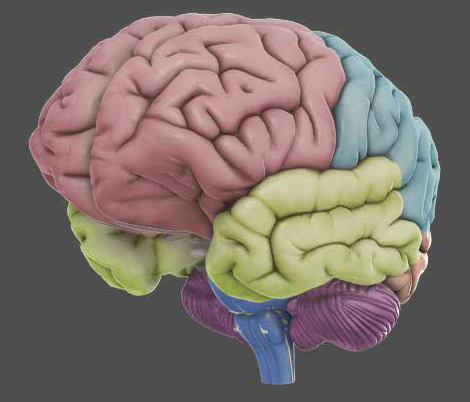
See if you can locate the visual and motor centers of the cortex in the program, the places where we think of animals vs. tools. Extra credit: find the place where we recognize (mostly human) faces in the brain (the fusiform gyrus. It is not identified in this program, but the internet is a big place with lots of information!
- While our production of speech and our mastery of (at least word-order) grammar is concentrated near a motor region of the brain, our comprehension of semantics (meaning) is related more to an area close to the auditory, tactile, and visual regions.
See if you can locate these areas and name them.
Attachments
- Capture.PNG241 KB
0 comments
Sign in to join the conversation.