

On Being Human
Are humans hard-wired for racial prejudice?
The answer is more complicated than it seems.
By Robert M. Sapolsky July 28, 2013
Reaction to the acquittal of George Zimmerman was just the latest reminder: Race continues to divide us as a species.
But why? Are human brains hard-wired to notice and react to racial differences? At first glance, that's precisely what research seems to demonstrate.
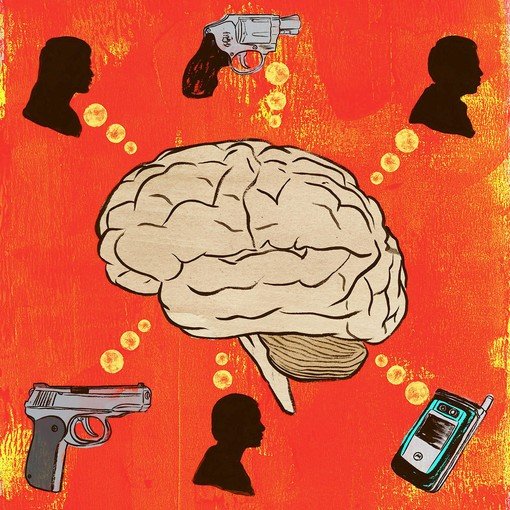
Some of the most compelling evidence for a hard-wired racial divide concerns a brain region called the amygdala, which plays a central role in processing fear and aggression. If you were put in a brain scanner that identifies levels of activity in different regions and shown a picture of something scary, your amygdala would leap into action, telling your heart to race and your skin to get clammy. It would also help you decide what to do next: Run like hell? Pull the trigger? Wet your pants?
Most regions of the brain are "told" what you are seeing only after that information has first been processed by specialized areas of the cortex — a glacially slow process (by neurobiological standards, that is; it takes about half a second). But the amygdala can get information far more quickly, through pathways that bypass those lumbering cortical regions. The amygdala can register information that appears for less than one-20th of a second, a time so short that you aren't even aware of what you saw. And unfortunately, that information isn't necessarily accurate.
So how does race enter into this picture? Numerous studies have found that if you put someone in a brain scanner and show him brief flashes (one-20th of a second) of emotionally neutral faces, the amygdala activates if the face is someone of a different race.
Now consider a brain region called the fusiform cortex, which specializes in detecting faces. Work by John Gabrieli at MIT shows that the fusiform isn't as active when viewing the face of someone of another race. It's not about novelty: Show a face with bright purple skin and there isn't that blunting of the fusiform response. Other studies have shown that brain regions involved in empathy are more active when seeing a needle poking a finger with your own skin color than one of another race.
All this plays out behaviorally too. In work by Joshua Correll at the University of Colorado, volunteers played a video game in which they rapidly saw pictures of people holding either a gun or a cellphone, with the instruction to shoot only those with guns. When white participants (including police officers) were shown an African American, they tended to shoot faster and were more likely to mistake a cellphone for a gun.
All this is not only depressing, it's puzzling, if you think about it.
For the majority of human history, people lived in hunter-gatherer bands where they never met anyone of another race. The nearest such person was likely to be hundreds or thousands of miles away. It's only extremely recently, in evolutionary terms, that humans have become mobile enough to encounter other races. Why, then, should our brains have evolved to have such automatic, inevitable, aversive processing of people of other races when such encounters have played virtually no role in how humans evolved? The answer is, they haven't. The aversive processing is neither automatic nor inevitable.
For starters, all the studies discussed found individual variation. Not everyone has an overactive amygdala, an underactive fusiform or an itchier trigger finger when seeing someone of another race. Who are the exceptions? Predictably, people brought up in more racially diverse settings, those with friends or romantic partners of another race.
And even for those who don't live multi-culti lives, the xenophobia isn't inevitable. It can be blunted by context. In Correll's work, if the person with the gun or cellphone is pictured in a neutral background, whites show a shooting bias toward blacks. Use a scary background in the picture instead and the bias disappears; subjects now show equally rapid-fire judgment about whom to shoot. In the amygdala-activation studies, it matters who is pictured: White subjects don't have amygdaloid activation when viewing a picture of, say, Bill Cosby. (When you read this literature, you realize that Bill Cosby is God's gift to scientists doing this research.)
And here's the most heartening news: These brain responses can be fairly easily overridden. Chad Forbes at the University of Delaware demonstrated that if whites viewed a black face while hearing loud rap music, the amygdaloid response got even bigger. But put that same face over death-metal music — associated with negative white stereotypes — and you don't get the same amygdala reaction.
Moreover, the brain's response to race can be overridden by re-categorizing people. As reported by Robert Kurzban at the University of Pennsylvania, subjects shown a film clip of a mixed-race crowd of people tended to unconsciously categorize people in the crowd by race. But if people in that crowd were wearing one of two different sports jerseys, subjects categorized them by team affiliation instead of by race. In other words, if the brain evolved to make automatic racial distinctions, it evolved even more strongly to differentiate between Dodgers fans and Giants fans.
Finally, work by Susan Fiske at Princeton found something else that can override the amygdala response to another race. Subjects were asked to decide whether people in the pictures they were shown would like a particular vegetable. In other words, they were asked to imagine the tastes of the people, to think about what they'd buy in a market, and to imagine them relishing a favorite vegetable over dinner. In that exercise, even if the face a subject saw was of another race, the amygdala wasn't activated.
In other words, simply thinking about someone as a person rather than a category makes that supposedly brain-based automatic xenophobia toward other races evaporate in an instant. Maybe there's hope for us as a species after all.
Robert M. Sapolsky is a professor of neuroscience at Stanford University and the author of "A Primate's Memoir," among other books. He is a contributing writer to Opinion.
__________________________________________________________
Human -- for better or worse
Scientists examining our moral core study intuition and calculated analysis to try to determine whether we are naturally good or bad.
January 06, 2013|By Robert M. Sapolsky
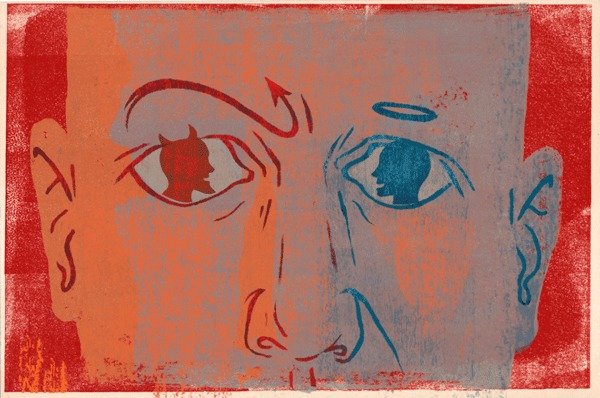
Are people, by nature, kind or rotten? This question has kept philosophers, theologians, social scientists and writers busy for millenniums.
A vote for our basic rottenness comes from scholars such as Steven Pinker of Harvard, who has documented how it is the regulating forces of society, rather than human nature, that have brought a decline in human violence over the centuries. A vote for our basic decency comes, surprisingly, from work by primatologists such as Frans de Waal of Emory University, who have observed that other primates display the basics of altruism, reciprocity, empathy and a sense of justice. Those virtues have a long legacy that precedes humans.
It's obviously hard to answer the question of what primordial humans were like, since we can't go back in time and study them. But another way of getting at this issue is to study people who must act in a primordial manner, having to make instant gut decisions. Do we tend to become more or less noble than usual when we must act on rapid intuition?
Light is shed on this in a recent study by David Rand and colleagues at Harvard, published in the prestigious journal Science, and the research is tragically relevant. The authors recruited volunteers to play one of those economic games in which individuals in a group are each given some hypothetical money; each person must decide whether to be cooperative and benefit the entire group, or to act selfishly and receive greater individual gain. A key part of the experiment was that the scientists altered how much time subjects had to decide whether to cooperate. And that made a difference. When people had to make a rapid decision based on their gut, levels of cooperation rose; give them time to reflect on the wisdom of their actions, and the opposite occurred.
Testing a new set of volunteers, the authors also manipulated how much respect subjects had for intuitive decision-making. Just before participating in the economics game, people had to either write a paragraph about a time that it had paid off to make a decision based on intuition rather than reflection, or a paragraph about a time when reflection turned out to be the best way to go. Bias people toward valuing quick, intuitive decision-making, and they acted more for the common good in the subsequent game. In contrast, bias people in the reflective direction, and "looking out for No. 1" comes more to the forefront — something the authors termed "calculated greed."
Naturally, not everyone behaved identically in response to these experimental manipulations. Where might differences come from? The authors asked participants a simple question: On a scale of 1 to 10, how much can you trust people whom you interact with in your daily life? And the more trusting subjects were, the more quick, intuitive thinking pushed them in the direction of cooperation. If you view the world as a benevolent place, your rapid-fire, reflexive response in a situation is more likely to spread that benevolence further.
Neuroscience has generated a trendy new subfield called "neuroeconomics," which examines how the brain makes economic decisions. The field's punch line is that we are not remotely the gleaming, logical machines of rationality that most economists proclaim; instead, we make decisions amid the swirl of our best and worst emotions. Neuroeconomics, in turn, has spawned the sub-subfield of "the neuroscience of moral judgment." Scientists such as Jonathan Haidt of New York University have shown that we frequently feel rather than think our way to moral judgments; in general, the more affective parts of our brains generate quick, intuitive, moral decisions ("I can't tell you why, but that is wrong, wrong, wrong"), while the more cognitive parts play catch-up milliseconds to years later to come up with logical rationales for our gut intuitions. Thus, it is obviously important to understand what leads intuitive decisions in the direction of acting for the common good.
What's the relevance of this research to current events? Every parent can tell you that sharing and cooperating are definitely acquired traits for children. Now, kids don't learn to act for the common good through moral reasoning — 5-year-olds don't think, "My goodness, if I act with self-interest at this juncture, it will decrease the likelihood of future reciprocal altruism, thereby depressing levels of social capital in my community." Kids don't learn to care for the well-being of others by thinking — brain development isn't quite there yet. They do so by feeling — imagine how that person feels, imagine how you would feel if that were done to you. Barney and Mister Rogers, rather than Immanuel Kant and Soren Kierkegaard. A world in which goodness is an act of intuition, rather than of reasoning. As well as a world in which cynicism and distrust are not yet commonplace.
This must do interesting things to an adult who spends lots of time around young kids, this world of trust and intuition-based decency. Say, a teacher, or school psychologist or principal in a suburban Connecticut elementary school. And then it happens, a circumstance that no human can anticipate, a moment of horrific menace, where there is only a reflexive instant to decide whose well-being comes first. What happens then?
What happens? Anne Marie Murphy. Dawn Hochsprung. Lauren Rousseau. Mary Sherlach. Rachel D'Avino. Victoria Soto. That's what happens. And the rest of us can only stand in awe at the heartbreaking beauty of what they did.
Robert M. Sapolsky is a professor of neuroscience at Stanford University and the author of "A Primate's Memoir," among other books. He is a contributing writer to Opinion.
0 comments
Sign in to join the conversation.