

A Fascinating Postcolonial Reading of Paul's Letter to the Galatians by Aliou Cissé Niang
Extracted text from Niang.pdf:
FAITH AND FREEDOM IN GALATIA: A SENEGALESE DIOLA SOCIOPOSTCOLONIAL HERMENEUTICS
by
Aliou Ciss Niang
Bachelor of Religious Studies, 1995 Williams Baptist College Walnut Ridge, Arkansas
Master of Theological Studies, 1997 Logsdon School of Theology Hardin-Simmons University
Dissertation
Presented to the Faculty of the Brite Divinity School in partial fulfillment of the requirements for the degree of
Doctor of Philosophy in Biblical Interpretation Fort Worth, TX December 2007
FAITH AND FREEDOM IN GALATIA: A SENEGALESE DIOLA SOCIOPOSTCOLONIAL HERMENEUTICS
APPROVED BY DISSERTATION COMMITTEE: Dr. David L. Balch Dr. David L. Balch, Dissertation Director
Dr. Carolyn Osiek Dr. Carolyn Osiek, Reader
Dr. Leo G. Perdue Dr. Leo G. Perdue, Reader
Dr. Edward J. McMahon Dr Edward J. McMahon, Assistant Dean for Advanced Programs
Dr. Nancy J. Ramsay Dr. Nancy J. Ramsay, Dean
WARNING CONCERNING COPYRIGHT RESTRICTIONS
The copyright law of the United States (Title 17, United States Code) governs the making of photocopies or other reproductions of copyrighted materials. Under certain conditions specified in the law, libraries and archives are authorized to furnish photocopy or reproduction. One of these specified conditions is that the photocopy or reproduction is not to be used for any purpose other than private study, scholarship, or research. If a user makes a request for, or later uses, a photocopy or reproduction for purposes in excess of "fair use," that user may be liable for copyright infringement. This institution reserves the right to refuse to accept a copying order if, in its judgment, fulfillment of the order would involve violation of copyright law.
ACKNOWLEDGMENTS
Writing yet another dissertation on Paul's Epistle to the Galatians has been an assiduously heuristic task and challenging experience. I extend my first debt of gratitude to Dr. David L. Balch, my unfailing doctoral advisor and mentor, for his erudite ability to peak my interest in classical writers and pertinent textual parallels that underpinned most of the historical and literary worlds of the Second Temple and New Testament Judean authors. To have an advisor and mentor of this quality is a gift from God. Additionally, my appreciations also go to Drs. Leo G. Perdue and Carolyn Osiek whose generosity is expressed through their indispensable critical readings and recommendations. Dr. Perdue introduced me to postcolonial perspectives on the Bible--a course that gave rise to my first publication and the present dissertation. I am grateful to Dr. Marijana Ricl on the Faculty of Philosophy in Beograd, Serbia and Montenegro, for her kindness in sending me the French summary of her dissertation entitled: La conscience du pch dans les cultes anatoliens l'poque romaine: La confession des fautes rituelle et thiques dans les cultes Moniens et Phrygiens (Belgrade, 1995). I am grateful to Dr. Edward McMahon, Assistant Dean for Advanced Programs, for his unfailing assistance. I owe special thanks to Dr. Darren Middleton, Dr. David Grant and Dr. Yushau Sodiq who taught me how to turn the art of teaching
v into an expression of life. I am indebted to the late Dr. Daryl Schmidt who believed in empowering people like me to exercise and cultivate their gift of teaching. I thank my professors at Logsdon School of Theology, Hardin-Simmons University: H. K. Neely, W. George Knight and Vernon Davis and my Williams Baptist College professors: Rodney Reeves and Jeph O. Holloway for their contributions to my spiritual and academic journey. I owe many thanks to Bernice C. Martin, my loving and caring guardian and sponsor. I gratefully acknowledge Dr. Bruce Swihart and Wanda Swihart who faithfully advised, sponsored and encouraged me throughout the years. I would like to thank Kim and Lana Bridges, Jesse and Gail Summitt, and Russell and Beth Weathersby for their gracious and loving support. I am grateful to the President, Dr. Daniel J. Earheart-Brown, and Dean, Dr. Barbara A. Holmes, of Memphis Theological Seminary for graciously awarding me with my first full-time teaching position. Along with the professors and staff of Memphis Theological Seminary, they were patient, prayerful and encouraging while I was completing my dissertation. Any thanks and appreciations prove inadequate to my wife, companion, faithful helper, and agent of God's presence in my life, Elizabeth Rene Niang. Her critical eye and keen grasp of words were central to the completion of this dissertation.
CONTENTS
TITLE PAGE . . . . . . . . . . . . . . . . . . . . . . . . . . . . . . . . . . . . . . . . . . . . . . . . . . . . . .
i
COPYRIGHT . . . . . . . . . . . . . . . . . . . . . . . . . . . . . . . . . . . . . . . . . . . . . . . . . . . . . . iii ACKNOWLEDGMENTS . . . . . . . . . . . . . . . . . . . . . . . . . . . . . . . . . . . . . . . . . . . . iv ABBREVIATIONS . . . . . . . . . . . . . . . . . . . . . . . . . . . . . . . . . . . . . . . . . . . . . . . . viii 1. INTRODUCTION: A SOCIOPOSTCOLONIAL HERMENEUTICS . . . . . . . An Interdisciplinary Method . . . . . . . . . . . . . . . . . . . . . . . . . . . . . . . . . . . . . . . Paul as a Sociopostcolonial Hermeneut . . . . . . . . . . . . . . . . . . . . . . . . . . . . . . . Dominant Perspectives on Paul Beyond the Perspectives on Paul Insights from Social Sciences: A Concise History . . . . . . . . . . . . . . . . . . . . . . Social Sciences and Galatians . . . . . . . . . . . . . . . . . . . . . . . . . . . . . . . . . . . . . . Postcolonial Contributions . . . . . . . . . . . . . . . . . . . . . . . . . . . . . . . . . . . . . . . . Classical and Hellenistic Examples A Roman Example A French Example A Diola Sociopostcolonial Hermeneutics 1 1 11
19 22 30
- IDENTITY AND THE SOCIORELIGIOUS CONTEXT OF PRE-CHRISTIAN AND CHRISTIAN GALATIANS . . . . . . . . . . . . . . . . . . . . . . . . . . . . . . 46 The History of Research . . . . . . . . . . . . . . . . . . . . . . . . . . . . . . . . . . . . . . . . . . 46 Who Were the Gauls/Galatians?: Gauls in Classical Literature . . . . . . . . . . . . 47 Writing the Gauls/Galatians: Classical Typologies . . . . . . . . . . . . . . . . . . . . . . 51 Barbarism Publically Displayed as Vanquished . . . . . . . . . . . . . . . . . . . . . . . . 59 The Inescapable Eyes of the Gods: The Socioreligious Aspects of Anatolian Galatian Life . . . . . . . . . . . . . . . . . . . . . . . . . . . . . 62 Socioreligious Context Gods, Goddesses and People in Galatia Curses, Prayers and the Quest for Divine Justice Voices Etched on Stones: The Divine Demand for Confession-Propitiation Priests and their Function
vii 3. SENEGALESE DIOLA IN CONTEXT . . . . . . . . . . . . . . . . . . . . . . . . . . . . . . 89 Who Were the Diola? . . . . . . . . . . . . . . . . . . . . . . . . . . . . . . . . . . . . . . . . . . . . 89 Africans as Barbarians and Savages Barbarians and Savages: Diola People Through French Eyes The Inescapable Presence of Ala or Ata Emit: The Socioreligious Dimensions of Diola Communal Life. . . . . . . . . . . . . . . . . . . . . . . . . 104 The Diola Socioreligious Setting The Inescapable Presence of Ata, Ala Emit or Emitai Curses and Prayers: The Quest for Divine Justice in the Hank (Community) The Role of the Priesthood Prophecy of Resistence and Creation of an Alternative Hank "Community". . . . . . . . . . . . . . . . . . . . . . . . . . . . . . . . . . . . . . . 117 Socioreligious and Economic Context Prophetic Resistence to French Colonial Rule 4. MODES OF COMMUNITY AND IDENTITY FORMATION: AN EXEGESIS OF GALATIANS 2:11-14 AND 3:26-29 . . . . . . . . . Conflict and Parting of Ways with an Enslaving Mission: Gal 2:11-14 . . . . . . . . . . . . . . . . . . . . . . . . . . . . . . . . . . . . . . The Locus and Nature of a Freeing Mission: Gal 3:26-29 . . . . . . . . . . . . . . . Community and Identity Formation in Galatian and Diola Communities . . . . . . . . . . . . . . . . . . . . . . . . . . . . . . . . . . . . . . . Judean Identity Formation and non-Judean Inclusion A Pauline Community and Identity Formation A Diola Community Formation
125 125 140 148
- A POSTCOLONIAL READING OF PAUL'S EPISTLE TO THE CHURCHES OF GALATIA: A CONCLUDING PROPOSAL . . . . . 163 Divine Rationale for Colonization in Ancient and Modern Times . . . . . . . . . 163 Greek Colonization Roman Colonization French Colonization Sociopostcolonial Hermeneutical Contributions . . . . . . . . . . . . . . . . . . . . . . . 170 Current African Postcolonial Voices Paul as a Countercolonist and Sociopostcolonial Hermeneut A Liberating Inculturation of the Biblical Message 6. BIBLIOGRAPHY . . . . . . . . . . . . . . . . . . . . . . . . . . . . . . . . . . . . . . . . . . . . . . 191
ABBREVIATIONS AB ABD Anchor Bible Anchor Bible Dictionary. Edited by D. N. Freedman. 6 vols. New York, 1992 Anchor Bible Reference Library African Historical Dictionary The American Journal of Archaeology and of the History of the Fine Arts American Journal of Philology Analecta Biblica Ancient Near Eastern Texts Relating to the Old Testament. Edited by J. B. Pritchard. 3d ed. Princeton, 1969 Aufstieg und Niedergang der rmischen Welt: Geschichte und Kultur Roms im Spiegel der neueren Forschung. Edited by H. Temporini and W. Haase. Berlin, 1972American Philological Association Classical Resources Series African Studies Review British Institute of Archeology at Ankara Monograph No. 4. B. A. R., 122 Banbury Road, Oxford OX2 BP, England, 1982 Bauer, W., F. W. Danker, W. F. Arndt, and F. W. Gingrich. Greek English Lexicon of the New Testament and Other Early Christian Literature. 3d ed. Chicago, 1999 Brown, F., S. R. Driver, and C. A. Briggs. A Hebrew and English Lexicon of the Old Testament. Oxford, 1907
ABRL AHD AJAHFA
AJP AN ANET
ANRW
APACR ASR BAAM
BDAG
BDB
ix BHS Biblia Hebraica Stuttgartensia. Edited by K. Elliger and W. Rudolph. Stuttgart, 1983 Biblical Interpretation Black's New Testament Commentaries Die Beichtinschriften Westkleinasiens Catholic Biblical Quarterly The Complete Concordance to Flavius Josephus Collection d' tudes, de document et de tmoignages pour servir l' Histoire de notre temps Corpus inscriptionum graecarum. Edited by A. Boeckh. 4 vols. Berlin, 1828-1877 Corpus Iuris Civilis II: Codex Iustinianus, Berlin 1906 Cuneiform Monographs Corpus Monumentorum Religionis Dei Menis Classical Philology Hatch, Edwin and Henry A. Redpath. A Concordance to the Septuagint: And the Other Greek Versions of the Old Testament (Including the Apocryphal Books) (2nd ed.; Grand Rapids, MI; Baker Book House, 1998) Cambridge Studies in Social and Cultural Anthropology Dictionary of Biblical Interpretation Epigraphica Anatolica Exhaustive Concordance to the Greek New Testament
BibInt BNTC BWK CBQ CCFJ CEDTSHT
CIG
C. Iust. CM CMRDM CP CS
CSSCA DBI EA ECGNT
x EDNT Exegetical Dictionary of the New Testament. Edited by H. Balz, G. Schneider. ET. Grand Rapids. 1990-1993 Das Evangelium nach Philippos, Coptic text. Edited and translated by W. C. Till, Patristische Texte und Studien 2. Berlin: de Gruyter, 1963; Schenke, Hans-Martin. The Gospel of Philip: New Testament Apocrypha. Vol I. Edited by Wilhem Schneemelcher. Translated by R. McL. Wilson. Westminster/John Knox: Louisville, KY, 1990 tudes prliminaires aux religions orientales dans l'empire romaine Epistula and Rheginum (De resurrectione), Coptic text. Edited and translated by M. Malinine, H. Ch. Puech, G. Quispel, W. Till. Zrich: Rascher, 1963 Ergnzungsbnde Zu Den Tituli Asiae Minoris. sterreichische Akademie Der Wissenschaften Excerpta ex Theodoto, from Stromata, Clement of Alexander. Edited and translated by F. Sagnard, Les Extraits de Thodote, Sources Chrtiennes 23. Paris: ditions du Cerf, 1948 Foreign and Comparative Studies/Eastern Africa XVI Fragments from Hellenistic Jewish Authors. Edited by Carl R. Holladay. 4 Vols. Atlanta, GA: Scholars Press, 1983-96 Forschungen zur Religion und Literatur des Alten und Neuen Testaments Koehler, L., W. Baumgartner, and J. J. Stamm. The Hebrew and Aramaic Lexicon of the Old Testament. Translated and edited under the supervision of M. E. J. Richardson. 4 vols. Leiden, 1994-1999 Kohlenberger III, John R. and James A. Swanson. The Hebrew English Concordance to the Old Testament with the New International Version. Grand Rapids, MI: Zondervan Publishing House, 1998 Harvard Studies in Classical Philology
EP
EPRO ER
ETAM
Exc
FCSEA FHJA
FRLANT
HALOT
HECOT
HSCP
xi HT HTR ICC IFT IJAHS ILS JA JAAR JAH JBL JEH JHS JQR JR JRS JSJ History and Theory Harvard Theological Review International Critical Commentary Introduction in Feminist Theology International Journal of African Historical Studies Inscriptiones Latinae Selectae Jeune Afrique Journal of the American Academy of Religion The Journal of African History Journal of Biblical Literature Journal of Ecclesiastical History Journal of Hellenic Studies Jewish Quarterly Review Journal of Religion Journal of Roman Studies Journal for the Study of Judaism in the Persian, Hellenistic, and Roman Periods Journal for the Study of the New Testament Journal for the Study of the New Testament: Supplement Series Journal for the Study of the Old Testament: Supplement Series Journal for the Study of the Pseudepigrapha: Supplement Series
JSNT JSNTSup JSOTSup JSPSup
xii LCL LEFAR Loeb Classical Library Librairie des coles Franaises d' Athnes et de Rome, Georges Pter, L' Effort Franais au Sngal J. Lust, E. Eynikel, and K. Hauspie, Greek-English Lexicon of the Septuagint Library of Pauline Studies Louvain Studies Liddell, H. G., R. Scott, H. S. Jones, R. McKenzie, A Greek-English Lexicon. 9th ed. with revised supplement. Oxford, 1996 Septuagint. Edited by Alfred Rahlfs Monumenta Asiae Minoris Antiqua: vol. 4: Monuments and Documents from Eastern and Western Galatia, edited by W. H. Buckler, W. M. Calder and W. K. Guthrie. Manchester and London, 1928-1993 Modern Language Quarterly Masoretic Text New Documents Illustrating Early Christianity. Edited by G. H. R. Horsley and S. Llewelyn. North Ryde, N.S.W., 1981The New Interpreter's Bible New International Dictionary of the New Testament New International Dictionary of New Testament Theology. Edited by C. Brown. 4 vols. Grand Rapids, 1975-1985 New International Greek Testament Commentary Novum Testamentum
LEH
LPS LS LSJM
LXX MAMA
MLQ MT NewDocs
NIB NIDNT NIDNTT
NIGTC NT
xiii NTR NTS NTTS OBT OCD New Testament Readings New Testament Studies New Testament Tools and Studies Overtures to Biblical Theology Oxford Classical Dictionary. Edited by S. Hornblower and A. Spawforth. 3d ed. Oxford, 1996 Oxford Dictionary of the Jewish Religion. Edited by R. J. Zwi Werblowsky and Geoffrey Wigoder. New York: Oxford University Press, 1997 Oxford Classical Monographs Oxford Latin Dictionary. Edited by R. C. Palmer. Oxford: Clarendon Press, 1968 Old Testament Pseudepigrapha. Edited by James H. Charlesworth. 2 vols. New York, 1983-1985 Prsence Africaine Paragon Issues in Philosophy Papers from the Norwegian Institute at Athens 4. Edited by David R. Jordan et. als. Review of Biblical Literature Regional Ephigraphic Catalogues of Asia Minor II: The British School of Archaeology at Ankara, Monograph No. 4. BAR International Series, 135; Oxford: BAR, 1982 Religion and Society Society of Biblical Literature
ODJR
OCM OLD
OTP
PA PIP PNIA
RBL RECAM II
RS SBL
xiv SBLTT SEG SFSHJ SGRR SHA SHS SJT SNT SNTSMS SNTW TAM TDNT Society of Biblical Literature Texts and Translations Pseudepigrapha Supplementum epigraphicum graecum South Florida Studies in the History of Judaism Studies in Greek and Roman Religion Scriptores Historiae Augustae Sciences Humaines Sociales Scottish Journal of Theology Supplements to Novum Testamentum Society for New Testament Studies Monograph Series Studies of the New Testament and Its World Tituli Asiae Minoris Theological Dictionary of the New Testament. Edited by G. Kittel and G. Friedrich. Translated by G. W. Bromiley. 10 vols. Grand Rapids, 1964-1976 Theological Lexicon of the New Testament. C. Spicq. Translated and edited by J. D. Ernest. 3 vols. Peabody, Mass., 1994 Analecta Biblica: Investigationes Scientificae in Res Biblicas Union Seminary Quarterly Review Vetus Testamentum World Archaeology West African Journal of Archaeology Word Biblical Commentary
TLNT
UB USQR VT WA WAJA WBC
xv WUNT YCS ZPE Wissenschaftliche Untersuchungen zum Neuen Testament Yale Classical Studies Zeitschrift fr Papyrologie und Epigraphik
INTRODUCTION : A SOCIOPOSTCOLONIAL HERMENEUTICS An Interdisciplinary Method The Gaul/Galatians were described in classical texts and visually portrayed on sculptures as vanquished barbarians.1 Graeco-Roman colonial/imperial hermeneutical legitimation textually labeled them primitive, savages, fickle, uncivilized barbarians, and warlike giant beasts2 as a means of reducing them into subjects to subdue, rule, Greecize,3 and Romanize. The French colonial officials and Holy Ghost Fathers also labeled the Diola savage, primitive, indolent, superstitious, J. J. Pollitt, Art in the Hellenistic Age (Cambridge: Cambridge University Press, 1986), 79-110; I. M. Ferris, Enemies of Rome: Barbarians Through Roman Eyes (Gloucestershire: Sutton Publishing, 2000), 1-16; David L. Balch, "Paul's Portrait of Christ Crucified (Gal 3:1) in Light of Paintings and Sculptures of Suffering and Death in Pompeiian and Roman Houses," in Early Christian Families in Context: An Interdisciplinary Dialogue (ed. David L. Balch and Carolyn Osiek; Grand Rapids, MI: Wm. B. Eerdmans Publishing Company, 2003), 84-108. Ferris, Enemies, 3-6; Pol. His. 18.17.9-12; 18. 41.7; 2.32.8; 3.78.2; 24.14.7; 3.3.5; Athenaeus, Deipn. iv.151e-152b; Livy, Hist. 38.17.9-10. David Rankin, "Celts Through Classical Eyes," in The Celtic World (ed. Miranda J. Green; New York: Routledge, 1995), 21-33, provides a concise discussion of typologies the above ancient authors apply to Celts, Gauls/Galatians. Nancy T. de Grummond, "Gauls and Giants, Skylla and the Palladion: Some Responses," in From Pergamon to Sperlonga: Sculpture and Context (ed. Nancy T. de Grummond and Brunilde S. Ridgway; Berkeley: University of California Press, 2000), 256; Greg Woolf, Becoming Roman: The Origins of Provincial Civilization in Gaul (New York: Cambridge University Press, 1998), 241-9. Encounters between cultures affect each party in such a way that they no longer maintain their initial nature. 3 2 1
2 and morally depraved people who have no religion and are in desperate need of civilization.4 Galatians 2:11-14 and 3:26-29 depict Paul as a sociopostcolonial hermeneut who acted on his self-understanding as God's messenger to create/form,5 through faith in the cross of Christ, free egalitarian communities. Like a Greek colonist, Saul, a famous persecutor of the church in Judea and the diaspora, was divinely cleansed and empowered to create a people.6 With his gospel, he fearlessly engaged G. G. Beslier, Le Sngal (CEDTSHT; Paris: Payot, 1935), 111, 123; Robert Baum, "Emergence of Diola Christianity," Africa 60/3(1990): 386. LSJM, "avpoikesi,a," 200, conveys the idea of settling in a foreign land. The verb form, avpoiki,zw, means to "colonize a place" or "send a colony to it" (1 Sam 4:22; 2 Kgs 15:29; 16:9; 17:6; Herod. Hist. 1.94; Thucydides, Hist. 1.24. 2). The word as Karl Heinrich Rengstorf, "avpoiki,zw," CCFJ, 1.185, quips, could mean "to resettle, settle elsewhere" or "send out" to inhabit a land (Josephus, Ant. 8.114). Neither the noun nor verb form occurs in Galatians. Paul however does use kti,sij "creation" (Gal 6: 15) and evkklhsi,a "assembly, community or church" (Gal 1:2, 13, 22). See "lh;q" ' (verb) and "lh'q" ' (noun) in John Kohlenberger III and James A. Swanson, HECOT, 7736-7. The verb lh;q' means "to congregate" or "assemble." The word lh'q' is often translated evkklhsi,a "assembly" or "community" in the LXX (see Edwin Hatch and Henry A. Redpath, "evkklhsi,a," CS, 433)--a term Paul uses to refer to his alternative communities. See Richard A. Horsley, "I Corinthians: A Case Study of Paul's Assembly as an Alternative Society," in Paul and Empire: Religion and Power in Roman Imperial Society (ed. Richard A. Horsley; Harrisburg, PA: Trinity Press International, 1997), 242-52. u`perbolh.n (extreme) denotes the intense nature of his persecuting of the church (Gal 1:13). Luke describes Paul as one evmpne,wn avpeilh/j kai. fo,nou eivj tou.j maqhta.j tou/ kuri,ou (breathing threats and murder against the disciples of the Lord). Brigitte Kahl, "Reading Galatians and Empire at the Great Altar of Pergamon," USQR 59/3-4(2005): 29-30, notes, "within the ancient world, the Jewish God was difficult to integrate and also had a shameful track record of trouble-making. But if we look at 6 5 4
3 in socioreligious conflicts to free the Gauls/Galatians from a mythologized defeat, of which they were publically fossilized at the Pergamum Frieze.7 That was the way he constructed Christian communities. As a Senegalese converted from Islam to Christianity and trained in Biblical interpretation in the West, I often wondered how Pauls Epistle to the churches of Galatia should be read and appropriated in the context of colonial, post and neocolonial Senegalese8 Diola communities of West Africa. In their initial the pre-Damascus Paul: how he zealously fights for the law and the traditions of 'his (he says 'my'-Gal 1:14) fathers', how he wages a holy war with God at his side, how he tries to destroy the lawless Other without mercy--it seems like a replica of the battle fought by the gods against the giants. It has a different color but essentially the same structure. JEWS versus GENTILES can be seen as equivalent to GREEKS versus BARBARIANS/GIANTS. In both cases, a dominant SELF upholding law and order stands against an OTHER defined as hostile to order and law. That means that the biblical God, in a way, despite his absence was there at the Great Frieze as well, God among Gods within the framework of a law-based order." Kahl, "Reading Galatians," 25, says the "Great Altar immerses us into a collective memory where the Galatians are firmly linked to the history of Pergamon, Rome, and the Greco-Roman world in General. They are seen, at least from the dominant perspective, as 'universal barbarians,' a sort of 'ancient terrorists' operating on a global scale-and they unite the Greco-Roman world not only in common fear of terror et tumultus (favorite words used by ancient victory to describe Galatians/Gauls/ Celts), but also in gratitude for any victory won over them." See also J. H. C. Williams, Beyond the Rubicon: Romans and Gauls in Republican Italy (OCM; Oxford: Oxford University Press, 2001), 217, on Roman ideology. Aliou Ciss Niang, "Postcolonial Biblical Interpretation in Geographical Settings: The Case of Senegal," in Reconstructing Old Testament Theology: After the Collapse of History (OBT; ed. Leo G. Perdue; Minneapolis, MN: Fortress Press, 2005), 319-329. The essay focuses solely on a unique Senegalese response to colonial policies of assimilation and association, a strategic and intellectual resistence 8 7
4 encounters with Diola peoples in 1835,9 Christians missionaries, the "Holy Ghost fathers,"10 zealous to share the Good News, failed to appreciate the socioreligious, economic and political dimensions of Diola communities.11 Shaped by the Enlightenment ideology and its moral conundrum, colonial administrators and to French hegemony and a hermeneutical primer. The Diola question was not raised because of its historical and phenomenological peculiarities that I will address in this work. Although ethnographers variably spell the name of this group of people as either Diola, Jola or Joola, this work will henceforth refer to them as Diola. The terms Sngal (French spelling) and Senegalese (English spelling) will be used henceforth when appropriate. Beslier, Le Sngal, 111. Attempts to colonize the Diola region were initiated by Le Lieutenant-gouverneur Pujol in 1835, who promised to build strong houses for the Diola. In 1837, Emmanuel Bertrand Bocand arrived in Carabane--a Diola village where he built trading posts. He was a traveler, a merchant, and a polyglot, adept in the taxonomy of insects (J. Bertrand-Bocand, et als., "Emmanuel BertrandBocande (1812-1881): un Nantais en Casamance," NT Bulletin de L' I. F. A. N. XXXI/1(1969): 279-302. Robert Delavignette, Christianity and Colonialism (trans. J. R. Foster; New York: Hawthorn Books Publishers, 1964), 63-78. Delavignette was a colonial administrator who served in Africa and as director at the Ministre de la France d' Outre-mer. He was an outspoken critic of French colonization (ibid., 37-52). This failure echoes Augustine's individualistic Soliloquies 2.1 in which he empathically expresses his "desire to know God and the soul. . . Nothing more." Although this reductionism predates the Enlightenment, the emphasis on the privatization of faith has generated a rampant individualism that affected much of the Enlightenment biblical exegesis up to this day. Augustine, too, failed to take seriously Paul's language that emphasizes the other more than the self. In Gal 2:20, he insists that . . . zw/ de. ouvke,ti evgw,( zh/| de. evn evmoi. Cristo,j . . . "and it is no longer I who live, but it is Christ who lives in me." The Apostle Paul thus shows that boundaries between him and Christ are removed--giving rise to a new community in which Christ is present. The immanence of Jesus Christ in the community shapes the identity of its members (Gal 3:28). 11 10 9
5 Christian missionaries affirmed both human equality from birth and inequality resulting from the accidents of nature. They believed il n' y a pas entre l' Europen et l' indigne du Sngal de diffrence essentielle qui empche ce dernier de profiter des avantages acquis par la civilisation occidentale. Les sociologues dmontrent que les race africaines sont aptes au progrs et qu' ils n' y a aucune preuve de douter de leur facults cet gard.12 There are no significant differences between a European and an indigenous Senegalese person that would prevent the latter from profiting from advantages acquired from Western culture. Sociologists show that African races are suited for progress, and there is no proof that would question their faculties in this regard. Cloaked in this ideology is a sinister conviction of cultural supremacy that fueled the 1789 French Revolution and fostered a new French sociocultural braggadocio clearly articulated by Jules Michelet. . . . Le Franais veut surtout imprimer sa personnalit aux vaincus, non comme sienne, mais comme type du bon et du beau; c'est sa croyance nave. Il croit, lui, qu'il ne peut rien faire de plus profitable au monde que de lui donner ses ides, ses moeurs et ses modes. Il y convertira les autres peuples l'pe la main, et, aprs le combat, moiti fatuit, moiti sympathie, il leur exposera tout se qu'ils gagnent devenir Franais. . . . celui qui veut invariablement faire le mode son image, finira par y parvenir.13 Georges Pter, L' Effort Franais au Sngal (LEFAR; Toulouse, FR: Imprimerie F. Boisseau, 1933), 201. Jules Michelet, Autobiographie: Introduction a L'historie Universelle (Paris: Bibliothque Larousse, 1930), 221. My translation. See also Janet G. Vaillant, Black, French, and African: A Life of Lopold Sdar Senghor (Cambridge, MA: Harvard University Press, 1990), 37-39, who discusses French self-understanding as colonists and how such a perspective was intrenched in the thoughts of most Europeans, especially, English colonists. 13 12
6 . . . The French person desires above all to imprint his personality on the vanquished, not like his, but like the quintessence of the good and the beautiful type; this is his naive conviction. He believes that he can do nothing that would benefit the world more than to give it his ideas, customs, and manners. He will convert other peoples to these ways, sword in hand, and after the battle, extremely self-conceited and sympathetic, he will show them all that they gain by becoming French. . . whoever wants invariably to create the world in his image, would succeed. Closely linked to this "gallicizing" or "Frenchifying"14 mission is France's appeal to a divine mandate and claim to a superior culture and religious knowledge. Le christianisme a constitu l' homme moral; il a pos dans l' galit devant Dieu un principe qui devait plus tard trouver dans le monde civil une application fconde. . . Si le sens social doit nous ramener la religion, l' organe de cette rvlation nouvelle, l' interprte entre Dieu et l' homme, doit tre le peuple social entre tous. Le monde moral eut son Verbe dans le christianisme, fils de la Jude . . . la France expliquera le Verbe du monde social que nous voyons commencer. . . c'est la France qu'il appartient et de faire clater cette rvlation nouvelle et de l' expliquer. Toute solution sociale ou intellectuelle reste infconde pour l' Europe, jusqu' ce que la France l' ait interprte, traduite, popularise.15 Christianity formed the moral person and set a principle of equality before God that would later have a fruitful application in the secular world. . . If the social For this terminology, see Jane Goldie, Harrap's Shorter Dictionnaire: Anglais-Franais/Franais-Anglais France: Harrap Books Limited, 1993), 352. Strikingly, Michelet uses the rubric of turning other nations into French. He claims that France, "francisa les autres nations. Action, raction; absorption, rabsorption, voila le mouvement alternatif d'un organisme" "will Frencize other nations. Action, reaction; absorption, reabsorption, this is the alternative movement of an organism." The above words enshrine the making of French nationalism that justified the nation's colonial imperialism for centuries (Michelet, Autobiographie, 22-21). My translation. Michelet, Autobiographie, 231-32. See Delavignette's discussion of the duality that plagued Catholic missionaries in being colonists as well as God's messengers for the creation of Christian communities free from colonial trappings (Delavignette, Christianity, 63-87). 15 14
7 sense would lead us to religion, the agency of this new revelation, the interpreter between God and humanity, would be the social people among us. The moral world has its Verb in Christianity, child of Judea. . . France will explain the Verb to the social world that we are seeing begin. . . It is France's duty to spread this new revelation and to explain it. Every social or intellectual solution remains unfruitful for Europe, until France has interpreted, translated and popularized it. Consequently, "religion and civilization were inextricably mingled within the context of Christianity"16 to an extent that "the seminary of the Holy Ghost fathers was called 'the colonial seminary'."17 This seminary was authorized by Louis XIV, legalized by Louis XV on May 2, 1726, to train priests for French colonies and in December 1764, the cardinal of Fleury decreed "que le sminaire du Saint-Esprit serait dsormais l' intermdiaire oblig entre le gouvernement et le Saint-Sige, pour fournir aux colonies franaises des religieux aptes vangliser les pays infidles," "that the seminary of the Holy-Spirit will, from now on, mediate between the Robert Delavignette, Freedom and Authority in French West Africa (London: Frank Cass and Company Limited, 1950), 94. In 1659, Christian missions were not linked to colonization. Missionaries were to spread Christianity without changing or abolishing the customs and religious rituals of their prospective converts. Pope Gregory XV, in his Bull Inscrutabili Divinae (1659), specifically talks about the apostolic mandate to spread the gospel to all people and to "never make comparisons between the usages of these peoples and those of Europe; on the contrary, make haste to accustom yourself to them" (Delavignette, Christianity, 59). Unfortunately, his instructions would be set aside later. Delavignette, Christianity, 69. The Catholic missionary overseas viewed him/herself as a representative of his/her country and "would consider it filial impiety not to accept the colonial ideology of his country and his age. Never was it more tempting to confuse colonization with civilization" (Delavignette, Christianity, 71). On the colonial seminary, see Beslier, Le Sngal, 97, 115. 17 16
8 government and the Holy-Center in order to provide French colonies with religious people apt to evangelize infidel countries."18 Hence the colonists arrived in Sngal convinced that their oeuvre civilisatrice, "civilizing work," also known as la paix Franaise "the peace of France"19 was the universal civilization--the portal through which western civilization would be accessible to Africa and Christianity universalized. Aim Csaire blames this ideology on "Christian pedantry, which laid down the dishonest equations Fleury's words are quoted by Beslier, Le Sngal, 77n.1. These were the first missionaries sent to the Northern part of Sngal and later to the South in Diola communities. The italics are Beslier's. Genevive Lecuir Nemo, Mission et colonisation: Saint Joseph De Cluny: La premire Congrgation de femmes au Sngal de 1819 1904; Memoire de Matrise, Universit de Paris I, October 1985, 35. Mre Anne-Marie Javouhey was part of the colonial effort in Sngal; a letter she sent to Paris evokes how she felt toward Senegalese people. Beslier concurs with this vision insisting that: "La civilisation chrtienne tait en bonne voie. Mais les prtres forms par le sminaire colonial du Saint-Esprit, pionniers de cette civilisation, taient trop peu nombreux pour christianiser la terre d' Afrique qui s' ouvrait leurs efforts. La fondation d' un Institut missionnaire spcialement destine instruire les noires d' un bout l' autre des Guines, . . . tait ncessaire cette grand entreprise." "Christian civilization was on the right track. But priests trained by the colonial seminary of the Holy Ghosts, pioneers of this civilization, were not numerous enough to Christianize the land of Africa that was opening to their efforts. The founding of a missionary Institute especially destined for the education of blacks from one end of Guinea to another, . . . was necessary to this enterprise." (Beslier, Le Sngal, 115). My translation. Michael Crowder, Senegal: A Study in French Assimilation Policy (New York: Oxford University Press, 1962), 2; Niang, "Postcolonial Theology," 322. 19 18
9 Christianity = civilization, paganism = savagery. . ."20 This merge between Christianity and French civilization gave rise to a serious hermeneutical flaw when the French met the Diola--an encounter that turned the Good News of evleuqeri,an . . . evn Cristw/| Vihsou/ "freedom. . . in Christ" (Gal 2:4; 3:28) into news of terror for the Diola of Sngal. Just as Romans had deemed the ancient Celts and Gauls/Galatians, French colonists viewed Diola socioreligious and cultural traditions as inferior, barbaric, idolatrous, and superstitious21 mondus operandi. Just as the Gauls/Galatians were compelled (avnagka,zw) to Judaize (VIoudai?kw/j( ivoudai<zein), Diola people were also forced to Frencize. Aim Csaire, Discourse on Colonialism (trans. Joan Pinkham; New York: Monthly Review Press, 1972), 33. Csaire finds the colonial equations ironic because, instead of creating civilization, the brutal savagery of colonialism led to the decivilization of the colonists. In other words, any promise of civilization through colonization produces the opposite (31-46). Peter Mark, "Fetishers, 'Marybukes' and the Christian Norm: European Images of Senegambians and Their Religions, 1550-1760," ASR 23/2(Sept., 1980): 95-7. Parallel depictions of the Celts/Gauls are recorded in Polybius, Caesar, Plutarch. See Beslier who describes the Diola as being depraved people. He writes, "Les superstitions et les pratiques occultes compliquaient l' envie la situation morale des indignes. La mort appelait par surcrot la vengeance. Celui qui tait souponn d' avoir 'tu' le dfunt, c' est dire d' avoir mang son me tait soumis au jugement du fticheur, qui lui faisait absorber du poison, mlange de venin de serpent et de dchets de cadavres." "Superstitious and occult practices complicated the moral situation of indigenous people. Death called for extra vengeance. Whoever was suspected to have killed the deceased, namely to have eaten his/her soul was put to the judgment of the priest-king, who would have the culprit drink poison mixed with snake venom and cadaver remains" (Beslier, Le Sngal, 123). The history of these denigrating stereotypes reaches as far as pre-Enlightenment era. I will discuss those depictions of Diola religion in the next chapter. 21 20
10 Instead of equality in Christ (Gal 3:28), the Diola were characterized as inferior fickle beasts whose bibulousness often leads to fatal feuds over property disputes.22 It is in contrast to this Roman and French dehumanizing hegemony that I would argue that the Apostle Paul characterized himself as a countercolonist par excellence. Paul preached in Athens (1 Thess 3:1; Acts 17:16-34), identified himself as Jew, citizen of Tarsus in Cilicia (Acts 21:39), and Roman citizen by birth (Acts 22:28)--a status he inherited "from a former generation in his family who had received it as freed Judean slaves."23 The idea of sociocultural and spiritual consciousness raises serious questions about cultural identity. This message breaks down social boundaries, dismantles taboos, overthrows and challenges human institutions and cultures that dehumanize people. I will read Galatians 2:11-14 and 3:26-29 from the perspective of social sciences qualified by postcolonial contributions to conclude that Paul was a countercolonist and sociopostcolonial hermeneut. Christian Roche, Histoire de La Casamance: Conqute et rsistance: 18501920 (Paris: Editions Karthala, 1985), 32-33. Udo Schnelle, Paulus: Leben und Denken (Berlin: Walter de Gruyter, 2003), 46, 44-56 = The Apostle Paul: His Life and Theology (trans. M. Eugene Boring; Grand Rapids, MI: Baker Academic, 2005), 62, 60-69. Paul's experiences of the cross (Gal 1:12) in the worlds in which he was born, lived, traveled, preached, and died (Phil 3:4-5), gave rise to his countercolonizing message that led to a sociocultural and spiritual consciousness that sets the stage for a decolonization. It frees by empowering the colonized to reclaim their true and equal human status and identity in God (Gal 2:11-14 and 3:26-29). 23 22
11 Paul as a Sociopostcolonial Hermeneut Dominant Perspectives on Paul The Apostle Paul is a countercolonist par excellence whose message of faith is cast into a sociopostcolonial hermeneutics that upholds faith in Christ as a conceptual metaphor through which communities are made, shaped and freed. Pauline scholarship on Galatians has been marked by two dominant perspectives: Luther's and and the New Perspective on Paul. In the former, Paul is understood to have had a negative view of the law in response to the Judaism of his day for its works-righteousness.24 This reading has since been challenged by E. P. Sanders who Martin Luther, Luther's Works: Lectures On Galatians 1535 Chapters 1-4 (vol. 26; trans. and ed. Jaroslav Pelikan; Saint Louis. MO: Concordia Publishing House, 1963), 4-12. In contrast to the righteousness by faith which is "passive" involving belief in God's grace, righteousness by works is "active" with an emphasis on "doing." Luther's Paul sent his epistle to the churches of Galatia "to defend the righteousness that comes from faith and to refute the law and the righteousness that comes by works" (Luther, Lectures on Galatians, 21). A reliance on works is a misuse of the law--an action that denies grace which is the sin of "idolatry and blasphemy against God" (ibid., 253-4). In other words, the role of the law is to lead sinners to Christ (ibid., 348). Rudolf Bultmann, "DIKAIOSUNH QEOU," JBL 83(1964): 12-16. In this article, Bultmann reiterates Luther's position. Idem, Theology of the New Testament (trans. K. Grobel; New York: Charles Scribner's Sons, 1951, 1955), 1:264. Bultmann is convinced that the person's "effort to achieve his salvation by keeping the law only leads him into sin, indeed this effort itself in the end is already sin." See also Ernst Ksemann, Perspectives on Paul (Philadelphia, PA: Fortress Press, 1971). For more details on the Reformers' perspective on Paul, see Francis Watson, Paul, Judaism and the Gentiles: A Sociological Approach (New York: Cambridge University Press, 1986), 1-18. 24
12 insists that Palestinian Judaism was defined by a covenantal nomism25 in which one enters the community of God's people by grace and remains "by obeying the law."26 Sequels of these debates gave rise to assiduous hermeneutical inquiries that either aim at retrieving the center of Paul's theology27 or delving into his life and thought in his E. P. Sanders, Paul and Palestinian Judaism: A Comparison of Patterns of Religion (Philadelphia, PA: Fortress Press, 1977), 447-542; idem, Paul, the Law and the Jewish People (Philadelphia, PA: Fortress Press, 1983); James D. G. Dunn, ed. Paul and the Mosaic Law (Grand Rapids, MI: Wm. B. Eerdmans Publishing Company, 2001). Sanders' argument brings George Foot Moore's discussion of Paul to its ultimate conclusion (see George Foot Moore, Judaism: In the First Centuries of the Christian Era: The Age of Tannaim (vols. II and III; Peabody, MA: Hendrickson Publishers, 1960), 150-1. See also W. D. Davies, Paul and Rabbinic Judaism: Some Rabbinic Elements in Pauline Theology (Mifflintown, PA: Sigler Press, 1998), 1-16. Paul is said to have "a 'Christifying' of the Torah and ipso facto a 'spiritualizing' of it" (323). Sanders, Paul and Palestinian, 17-18. According to Sanders, law observance is an outward expression of one's loyalty to covenant membership. Ibid., 16-17, 204-5; Watson, Paul, Judaism, 1-18. Furthermore, acts of "getting in" and "staying in" are crucial sociological categories that allow covenantal nomism advocates to argue that Paul was taken up with some aspects of the law such as "identity and boundary markers"--laws governing food and circumcision [James D. G. Dunn, Jesus, Paul, and the Law: Studies in Mark and Galatians (Louisville, KY: Westminster John Knox Press, 1990)]. Jouette M. Bassler, ed., Pauline Theology: Volume I: Thessalonians, Philippians, Galatians, Philemon (Minneapolis, MN: Fortress Press, 1991); David M. Hay, ed., Pauline Theology: Volume II: 1 and 2 Corinthians (Minneapolis, MN: Fortress Press, 1993; David M. Hay and E. Elizabeth Johnson, ed., Pauline Theology: Volume III: Romans (Minneapolis, MN; Fortress Press, 1995; E. Elizabeth Johnson and David M. Hay, ed., Pauline Theology: Volume IV: Looking Back, Pressing On (SBL; Atlanta, GA: Scholars Press, 1997); and Schnelle, Leben und Denken = Apostle Paul. See also J. Christiaan Becker, Paul the Apostle: The Triumph of God in Life and Thought (Philadelphia: PA: Fortress Press, 1980); James D. G. Dunn, The Theology of Paul the Apostle (Grand Rapids, MI: Wm. B. Eerdmans Publishing 27 26 25
13 diaspora setting: the Graeco-Roman world.28 The result was an increasing awareness of the socioreligious diversity of Second Temple Judaism--"a vigorously heterogeneous, diversified phenomenon."29 Various trends of Judaism interpreted and applied ancestral traditions variably, leading some scholars to argue that Paul polemicized against a synergistic anthropocentrism based on human "self-sufficiency" rather than dependancy on Company, 1998). The last volume published by Pauline scholars (SBL) concluded with Paul W. Meyer's proposal for a halt of the entire project in order to reflect on new possibilities Pauline and Deutero-Pauline texts would yield [Paul W. Meyer, "Pauline Theology: A Proposal for a Pause in Its Pursuit," in Pauline Theology: Volume IV: Looking Back, Pressing On (SBL; ed. E. Elizabeth Johnson and David M. Hay, Atlanta, GA: Scholars Press, 1997), 140-60. For responses to this proposal, see Victor Paul Furnish, "Where is 'the Truth' in Paul's Gospel," in Pauline Theology: Volume IV: Looking Back, Pressing On (SBL; ed. E. Elizabeth Johnson and David M. Hay, Atlanta, GA: Scholars Press, 1997), 161-77]. See the collections of significant essays in Troels Engberg-Pedersen, ed., Paul in His Hellenistic Context (Minneapolis, MN: Fortress Press, 1995); idem, Paul Beyond the Judaism /Hellenism Divide (Louisville, KY: Westminster John Knox Press, 2001); J. Paul Sampley, ed., Paul in the Greco-Roman World: A Handbook (New York: Trinity Press International, 2003). James A. Sanders, From Sacred Story to Sacred Text: Canon as Paradigm (Philadelphia, PA: Fortress Press, 1987), 43-60. See also Oskar Skarsaune, In the Shadow of the Temple: Jewish Influences on Early Christianity (Downers Grove, IL: InterVarsity Press, 2002), 103-207; Robert A. Kraft and George W. E. Nickelsburg, eds., Early Judaism and Its Modern Interpreters (SBL; Atlanta, GA: Scholars Press, 1986). The Judaism of Paul's day was nothing short of a socioreligious polyphony in dialogue with a broad range of textual traditions. For further detail on the diverse nature of Judaism, see Frederick J. Murphy, Early Judaism: The Exile to the Time of Jesus (Peabody, MA: Hendrickson Publishers, 2002); Larry R. Helyer, Exploring Jewish Literature of the Second Temple Period: A Guide for New Testament Students (Downers Grove, IL: InterVarsity Press, 2002). 29 28
14 "divine grace."30 The Judaism of Paul's day was nothing short of a socioreligious polyphony.31 Obvious in the above mentioned debates is the deafening silence of commentators on the socioreligious context of Paul's addressees: The Gauls/Galatians. They are often mentioned in passing as if they were not the recipients of the epistle.
Beyond the Perspectives on Paul Debates between the Reformers, their followers and advocates of the New Perspective are largely confined to Paul's attitude toward the law and resulting conflicts with his so-called opponents.32 In his autobiography, Paul reminds his Galatian converts that to. euvagge,lion to. euvaggelisqe.n u`pV evmou/ o[ti ouvk e;stin kata. Charles H. Talbert, "Paul, Judaism and the Revisionists," CBQ 63(2001): 122. This article offers the most succinct and clear presentation of main views on Paul I have ever read. A closer look at this view will be taken up in the next chapter. For discussion on Pauline anthropology see Timo Eskola, "Paul, Predestination and 'Covenantal Nomism'- Re-assessing Paul and Palestinian Judaism," JSJ 28(1997): 390-412 and Timo Laato, Paul and Judaism: An Anthropological Approach (SFSHJ 115; trans. T. McElwain; Atlanta, GA: Scholars Press, 1995). 31 30
Sanders, From Sacred Story, 43-60.
Dieter Georgi, Opponents of Paul in Second Corinthians (Philadelphia, PA; Fortress Press, 1986). Gerd Ldemann, Opposition to Paul in Jewish Christianity (trans. M. Eugene Boring; Minneapolis, MN: Fortress Press, 1989), offers a crucial discussion on the identity of Paul's opponents from Pauline to post-Pauline literature. A recent work on the subject deals with the diversity of Paul's opponents from the evidence that his letters yield [Jerry L. Sumney, "'Servants of Satan' 'False Brothers' and Other Opponents of Paul (JSNTSup 188; Sheffield: Sheffield Academic Press, 1999)].
32
15 a;nqrwpon) ) ) o[ti kaqV u`perbolh.n evdi,wkon th.n evkklhsi,an tou/ qeou/ kai. evpo,rqoun auvth,n( "the Good News, the one being preached by me that it is not according to human. . . that I persecuted the church of God beyond measure and tried to destroy it" (Gal 1:11, 13). He was not only advancing (proko,ptw) beyond his peers, perissote,rwj zhlwth.j( he was "more zealous" (tw/n patrikw/n mou parado,sewn) for his "ancestral traditions" (Gal 1:14).33 The ancestral traditions Paul is referring to are enshrined in the Torah which is central to his arguments; as Francis Watson rightly argues, he is an interpreter of scripture in conversation with his fellow Judean interpreters as well as Galatian converts.34 Paul offers his Philippian readers the following autobiographical note saying that he was peritomh/| ovktah,meroj( evk ge,nouj VIsrah,l( fulh/j Beniami,n( ~Ebrai/oj evx ~Ebrai,wn( kata. no,mon Farisai/oj( kata. zh/loj diw,kwn th.n evkklhsi,an( kata. dikaiosu,nhn th.n evn no,mw| geno,menoj a;memptoj "circumcised on the eighth day, of the nation of Israel, the tribe of Benjamin, a Hebrew of Hebrews, according to the law a Pharisee, according to zeal persecuting the church, according to righteousness in the law being blameless" (Phil 3:5-6). Francis Watson, Paul and the Hermeneutics of Faith (New York: T & T Clark International, 2004), 1. This view of Paul is an indispensable approach to Pauline hermeneutics. See also Calvin Roetzel, The Letters of Paul: Conversations in Context (4th ed.; Louisville, KY: Westminster John Knox Press, 1998); idem., Paul: The Man and the Myth (South Carolina: University of South Carolina Press, 1998), 27. Roetzel's work reminds modern readers of significant dimensions of Paul's life and thought. Paul, he insists, should not be frozen in one cultural context; rather, Paul was fully conversant with his Jewish and Hellenistic worlds. Janice Capel Anderson, Philip Sellew and Claudia Setzer, Pauline Conversations in Context: Essays in Honor of Calvin J. Roetzel (JSNTSup 221; Sheffield: Sheffield Academic Press, 2002). However, often in Pauline scholarship, the tendency has been to overemphasize one aspect of Paul's context at the expense of the other [see Abraham J. Malherbe, Paul and the Popular Philosophers (Minneapolis, MN; Fortress Press, 1989); Troels 34 33
16 Paul's complex socioreligious world in which scripture was read and appropriated is not much different from that of twenty-first century reading communities. Leo G. Perdue has rightly argued that Old Testament theology is breaking away from the shackles of the historical critical method to new hermeneutical approaches initiated by reading communities at the margins. Resulting readings are thus characterized by a constructive hermeneutical consciousness that refuses to be enslaved by the rigid tenets of historical criticism.35 The meaning of the Bible is no longer buried in the graves of the dead who shaped ancient civilizations that formed the written texts, but now is to be situated--at least to some extent, if not, as some would argue, completely--within the myriad of interpreters with their vast networks of multiple social, sexual, gender, ethnic, and postcolonial milieus. Uniformity of meaning, once a cherished and nurtured yet highly utopian dream, has been blown by the winds of differentiated and conflicting possibilities into many situations and numerous ways of knowing and being.36 Engberg-Pedersen, Paul and the Stoics (Louisville, KY: Westminster John Knox Press, 2000); Mark D. Nanos, ed., The Galatians Debate: Contemporary Issues in Rhetorical and Historical Interpretation (Peabody, MA; Hendrickson Publishers, 2002; idem., The Irony of Galatians: Paul's Letter in the First-Century Context (Minneapolis, MN; Fortress Press, 2002). Leo G. Perdue, The Collapse of History: Reconstructing Old Testament Theology (OBT; Minneapolis, MN; Fortress Press, 1994) and Walter Brueggemann, Theology of the Old Testament: Testimony, Dispute, Advocacy (Minneapolis, MN; Fortress Press, 1997), xv-xviii, 1-114. Perdue does not pronounce the death of the historical critical method; rather, he is talking about its crisis (Collapse, 3-15), that would force its practitioners to hear emerging hermeneuts from marginalized cultures and communities of the "Two-Thirds World" (Collapse, 4-5). Leo G. Perdue, Reconstructing Old Testament Theology: After the Collapse of History (OBT; Minneapolis, MN; Fortress Press, 2005), 3. 36 35
17 Walter Brueggemann concurs with Perdue, insisting that this shift from assured results of the critical consensus of scholarship to the plurality of methodologies and interpretive communities gives rise to fresh endeavors away from dominant approaches to Old Testament theology.37 The verbal, nominal and adjectival syntax of the text of the Hebrew Bible reflects an odd tension that juxtaposes Israel's "core testimony" of Yahweh's faithfulness and reliable governance and "countertestimony" of divine "ambiguity," unreliability and "negativity"--an interplay of testimonies that renders a shift in biblical interpretation inevitable.38 To embrace one testimony over the other is to distort the biblical record and misinterpret the crucial dialectic of faith that presents God as "a character who has a profound disjunction at the core of the Subject's life."39 The dialectical tensions inherent in the textual traditions of the Hebrew Bible are also characteristic of the New Testament texts and faith with respect to how Paul 37
Brueggemann, Theology, xv, xv-xvi.
Brueggemann, Theology, 318. Brueggemann' s avoidance of the pitfalls of the historical critical method forced him to reduce divine revelation to Israel's rhetoric about God; namely, in Israel's speech. He has been rightly critiqued for holding to endless dialogues between communities of faith. At some point dialogue must yield to a life guided by decisive faithful actions (Leo G. Perdue, review of Walter Brueggemann, Theology of the Old Testament: Testimony, Dispute, Advocacy, Christian Century 115/16(May 20-27, 1998), 8. Brueggemann, Theology, 268. The arising tension between testimony and countertestimony belongs to the very character and substance of Old Testament faith, a tension that precludes and resists resolution (Brueggemann, Theology, 400). 39
38
18 reads and understands the Torah. According to Watson, "Paul and his fellow-Jews read the same scriptural texts, the Torah and the prophets" to configure their world-a reality held in tension by an interplay between world and text.40 Paul, he avers, is a reader who interprets scripture intertextually and cites selected texts on the basis of a radical construal of the normative shape of the Pentateuch as a whole, highlighting and exploiting tensions between Genesis and Exodus, Leviticus and Deuteronomy. Many of the apparent contradictions within Paul's "view of the law" in fact originate within the pentateuchal texts themselves, at least as Paul reads them.41 In his dialogue with voices, countervoices of the Old Testament and those of his fellow hermeneuts, Paul finds the promissory prophetic voice of Habakkuk (Hab 2:4) compelling for his apostolic hermeneutical discourse in which soteriology is a function of christology and ecclesiology.42 I would argue that the rise of marginal voices destabilizing "the dominant paradigm of historical criticism"43 is generated by Watson, Paul and the Hermeneutics , 1. Interpretation is a dynamic task. However, Watson has been faulted for speaking of Paul's reading of the Hebrew Bible in terms of "plain or literal sense." The reviewer's contention is actually the point Watson is making about Paul's interpretation of the Hebrew Bible [see Mark Gignilliat, review of Francis Watson, Paul and the Hermeneutics of Faith, RBL (May 2005): 4. 41 40
Watson, Paul and the Hermeneutics, 3. Watson, Paul and the Hermeneutics, 3-29. Perdue, The Collapse, 4.
42
43
19 intense interactions between scripture and sociocultural contexts which, in turn, yields alternative hermeneutics. Paul, therefore, was not only in dialogue with Judean traditions which maintain unresolved tensions, he was also conversant with the Galatian and contemporary socioreligious traditions. His hermeneutical discourse counters colonial discourses by creating new typologies that would best describe members of his communities (Gal 2:11-15; 3:27-29). In other words, Paul counters imperialistic and colonial metaphors such as Hellenize, Romanize, Judaize or Frencize. These interactions between interpreting communities raise profound hermeneutical questions arising from the sociopostcolonial horizons.
Insights from Social Sciences: A Concise History The flowering of social-scientific criticism as a sub-field of biblical studies in the early 1970s owes its inception to nineteenth century scholarship; especially to the work of Max Weber44 whose application of the Marxist theory led to the conclusion that change is a function of socioeconomic and political realities that governed the Max Weber, The Methodology of Social Sciences (trans. and ed. Edward A. Shils and Henry A. Finch; Glencoe, IL: Free Press, 1949), 93. These changes led to what Weber characterizes as "Church-Sect." Norman K. Gottwald, "Sociology," ABD 6:79; Susan R. Garrett, "Sociology of Early Christianity," ABD 6:89. For details on Weber and his influencers, see Dale Martin, "Social-Scientific Criticism," To Each Its Own Meaning: An Introduction to Biblical Criticisms and Their Application (rev. and exp.; ed., Stephen L. McKenzie and Stephen R. Haynes; Louisville, KY: Westminster John Knox Press, 1999), 125. 44
20 Israelite community.45 These conclusions have since been re-conceptualized by Norman Gottwald who insists that Yahweh was the pervasive force that regulated Israel's egalitarian socioreligious world and was experienced as an accessible deity.46 Since faith in Yahweh is an integral part of Israel's social experiences the sociological contribution to biblical hermeneutics is that the Israelite traditions must not only be interpreted within their original matrices, but must be interpreted from out of the social matrix of the interpreter. . . an adequate biblical hermeneutics will require the investigation of the evolution of social forms and systems from biblical times to the present!47 Applying the same Marxist analysis to New Testament documents led to the idea that the earliest Christian communities were marked by sectarian movements 45
Weber, Methodology, 93.
Norman Gottwald, The Tribes of Yahweh: A Sociology of the Religion of Liberated Israel, 1250-1050 BCE (Sheffield: Sheffield Academic Press, 1999), 667709. Yahweh, in this case, is the God who fights with tribal Israel against centralized government. Agreeably Israel's socioreligious experience of Yahweh is "not simply a descriptive counterpart to a social reality, but a powerful set of symbols which evoke, initiate, and energize, as well as legitimate" [Walter Brueggemann, review of Norman K. Gottwald, The Tribes of Yahweh: A Sociology of the Religion of Liberated Israel, JAAR 48/3(Sept., 1980): 449]. Erhard S. Gerstenberger, Theologies in the Old Testament (trans. John Bowden; Minneapolis, MN: Fortress Press, 2002), 163, looks at Israelite religion in terms of the socioreligious significance of tribal life in conflict with monarchical monopoly. Norman K. Gottwald, "Sociological Method in the Study of Ancient Israel," The Bible and Liberation: Political and Social Hermeneutics (ed. Norman K. Gottwald; New York: Orbis Books, 1989), 35-6. 47
46
21 arising from underprivileged classes; namely proletarians and slaves.48 Adolf Deissmann somewhat bolstered this conclusion positing that die soziale Struktur des Urchristentums weis uns durchaus in die unteren und in die mittleren Schichten. Nur ganz sprlich sind am Anfang die Beziehungen zu den oberen Schichten. Jesus von Nazareth war Zimmermann, Paulus von Tarsos Zeltmacher, und das Wort des Zeltmacher ber die Herkunft seiner Gemeinden aus den Unterschichten der Grostdte gehrt zu den historisch bedeutsamsten Selbstzeugnissen des Urchristentums. . . . Zur antiken Hochkultur stand das Urchristentum in einem natrlichen Gegensatz, nicht erst als Christentum, sondern schon als Bewegung der Unterschichten.49 Karl Kautsky, Der Ursprung des Christentums: Eine historische Untersuchung (Stuttgart: J. H. W. Dietz Nachfolger, 1910), 338-70. He views Christianity as a fighting organization which arose from Judaism adopting elements such as monotheism, resurrection and communism. I prefer to characterize this early movement as a debate among Judeans (Christians and non-Christians). Adolf Deissmann, Licht vom Osten: Das Neue Testament und die neuentdecten Texts der hellenistisch-rmischen Welt (4th ed.; Tbingen: Mohr, 1923), 6-7 = Light From the Ancient East: The New Testament Illustrated by Recently Discovered Texts of the Graeco-Roman World (trans. Lionel R. M. Strachan; Peabody, MA: Hendrickson Publishers, 1995), 7-9. "The social structure of early Christianity reflects undisputably the lower classes. From the beginning, its connection to upper classes were very exiguous. Jesus of Nazareth was a carpenter, Paul of Tarsus a tentmaker, and the tentmaker's words about the origin of his churches in the lower of the great towns form one of the most important testimonies, historically speaking, that early Christianity gives of itself. . . Early Christianity naturally stood against the high culture of the ancient world, not so much because it was Christianity, but because it was a movement of the lower classes." My translation. He nevertheless complains about overdrawn generalizations that tend to collapse the upper class with the remaining segments of society. Critical assessments of Deissmann's argument are found in Abraham J. Malherbe, Social Aspects of Early Christianity (2nd ed.; Philadelphia, PA: Fortress Press, 1983), 37-41. See also Justin J. Meggitt, "Response to Martin and Theissen," JSNT 84(2001): 85-95 and David L. Balch, "Rich Pompeiian Houses, Shops for Rent, and the Huge Apartment Building in Herculaneum as Typical Space for Pauline House Churches," JSNT 27/1(2004): 2746, on the socially mixed nature of Pauline churches. 49 48
22 Even though these conclusions have gained much resonance with New Testament scholars, the lack of consensus among practitioners of social sciences50 is a function of models or categories they utilize.51 That being the case, I would argue for a shift from characterizing Pauline Christianity as a mere sectarian movement to an inclusive movement with sociopostcolonial concerns.
Social Sciences and Galatians Social scientific investigations of Paul's epistle to the churches of Galatia have been limited to thematic explorations of specific pericopae. For instance, John H. Elliott, Jerome H. Neyrey and Susan Eastman insist that "fear of the Evil Eye" was a pervasive phenomenon in the ancient world--a socio-anthropological reality most commentators of the epistle overlook.52 Others like Philip F. Esler, James D. G. Martin, "Social-Scientific Criticism," 125. Descriptions range from "social historians," social-scientific critics, cultural anthropologists or ethnographers. Vernon K. Robbins "Social -Scientific Criticism and Literary Studies: Prospects for Cooperation in Biblical Interpretation," in Modeling Early Christianity: Social-Scientific Studies of the New Testament in Its Context (ed. Philip F. Esler; New York: Routledge, 1995), 274-89. Fascinating examples of the use of social scientific models and categories applied to the New Testament are found in David G. Horrell, ed. Social-Scientific Approaches to New Testament Interpretation (Edinburgh: T & T Clark, 1999). John H. Elliott, "Paul, Galatians, and the Evil Eye," Cross Current in Theology and Mission 17(August 1990): 262-271, argues that the word baskai,nw connotes the idea of "envy" and "to injure the Evil Eye" instead of "bewitched" as most English translations would have it. Like his contemporaries, Paul believed in malevolent forces ascribed to deities, animals and people with disabilities such as 52 51 50
23 Dunn, Paula Fredricksen, John Barclay and Mark D. Nanos investigate Judean and non-Judean social interactions.53 These scholars agree on the salient nature of socioanthropological dimensions of the nascent Christianity in Galatia. Although Esler's sociological commentary remains the most comprehensive study,54 major social scientific readings of Galatians have since appeared.55 A crucial aspect of these studies has to do with the making of Galatian communities. himself. The implication is that Paul was countering the same charges of malevolence of which his opponents have accused him. Jerome H. Neyrey, "Bewitched in Galatia: Paul and Cultural Anthropology," CBQ 50(1988): 72-100. Like John Elliott, Neyrey laments the fact that socio-anthropological aspects of Paul's Sitz im Leben are ignored at the expense of theology. Susan Eastman, "The Evil Eye and the Curse of the Law: Galatians 3.1 Revisited," JSNT 83(2001): 69-87. She argues that Paul's converts learned that the curses recorded by the Deuteronomist are tantamount to the casting of the " evil eye" (Deut 28:53-57). Nanos, ed., Galatians Debate, 199-318. Philip F. Esler, "Making and Breaking an Agreement Mediterranean Style: A New Reading of Galatians 2:1-14," BibInt 3(1995): 285-314, is expanded in his Galatians (NTR; ed. John Court; New York: Routledge, 1998) and in Nanos, Galatians Debate, 261-81. See also, Nanos, Irony ; John M. G. Barclay, "'Neither Jew nor Greek': Multiculturalism and the New Perspective on Paul," in Ethnicity and the Bible (ed. Mark G. Brett; New York: E. J. Brill Publishers, 1996), 197-214 ; Philip F. Esler, "Group Boundaries and Intergroup Conflict in Galatians: A New Reading of Galatians 5:13-6:10," in Ethnicity and the Bible (ed. Mark G. Brett; New York: E. J. Brill Publishers, 1996), 215-240. 54 53
Esler, Galatians, 93-140.
Susan Elliott, Cutting Too Close for Comfort: Paul's Letter to the Galatians in its Anatolian Cultic Context (JSNTSup 248; New York: T & T Clark International, 2003; Atsuhiro Asano, Community-Identity Construction in Galatians: Exegetical, Social-Anthropological and Socio-Historical Studies (JSNTSup 285; Sheffield: Sheffield Academic Press, 2005).
55
24 That being the case, community formation, identity and freedom are categories central to earliest Christians as they are to modern Christians. Two sociological models will be utilized in this work. First, a significant sociological model is one that "investigates biblical texts as meaningful configurations of language intended to communicate between composer and audiences."56 The epistle communicates a poignant message designed to reaffirm and shape the identity of his Galatian converts in Christ.57 Like any religious movement originating from a parent religion, Christianity arose from Judaism and due to ensuing discords over the nature of grace, laws governing circumcision, and foods along with human and cosmic transformation, it John H. Elliott, What is Social-Scientific Criticism? (Minneapolis, MN: Fortress Press, 1993), 7. Whether Social Scientific Criticism is a "sub-discipline of exegesis" or not is debated (Elliott, What is, 1). Idem, "Social-Scientific Criticism of the New Testament: More on Methods and Models," Semeia 35(1986): 1; idem, A Home for the Homeless: A Sociological Exegesis of 1 Peter, Its Situation and Strategy (Philadelphia, PA: Fortress Press, 1981). Contra John Elliott, Bruce J. Malina is of the conviction that the social scientific method is a self-contained discipline much like other disciplines that contribute to the historical critical method [Bruce Malina, "Reading Theory Perspective: Reading Luke-Acts," in The Social World of Luke-Acts : Models for Interpretation (ed. Jerome Neyrey; Peabody, MA: Hendrickson, 1991), 1-23]. I will argue that Paul's message to the churches of Galatia is intricately linked to their socioreligious experiences and convictions. Esler, Galatians, 1-2; idem., Community and Gospel in Luke-Acts: The Social and Political Motivations of Lucan Theology (Cambridge: Cambridge University Press, 1978), 1-23. Esler offers crucial insights into how communication is used to shape group identities in the first century Mediterranean world. 57 56
25 distanced itself from Judaism.58 That being the case, for a Senegalese Diola hermeneut to bring this message to bear on his/her communal experiences, he/she would have to be attentive to the cultural distance between his/her communities and those of Galatia and France. This way of delving into the epistle to the churches of Galatia is what Esler calls "biblical interculturalism, a hermeneutics derived from social rather than philosophical sources."59 This would be a dialogue between what Bruce J. Malina and John J. Pilch refer to as "high context" and "low context" cultures.60 Gerd Theissen, Social Reality and the Early Christians: Theology, Ethics and the World of the New Testament (trans. Margaret Kohl; Minneapolis, MN: Fortress Press, 1992), 202-27. Religious reform is often the result of internal discords which could lead to sectarianism (Esler, Community and Gospel, 16-21; Watson, Paul, Judaism, 19-20). Esler, Galatians, 4. Idem., New Testament Theology: Communion and Community (Minneapolis, MN: Fortress Press, 2005), 38-66. Bruce J. Malina and John J. Pilch, Social-Science Commentary on the Letters of Paul (Minneapolis, MN; Fortress Press, 2006), 5-9. Both authors argue that "high context culture" (such as first century Mediterranean context) have a keen knowledge of elements and concepts embedded in their conversations missing in those of a "low level culture" (such as in modern and postmodern worlds dimensions of communication are missing leaving gaps to be filled). So, when Paul speaks of Jews and Gentiles, he does not have to say that he meant "Judeans" and "Everyone Else." They knew that in their Mediterranean context, one is either Greek (civilized ) or barbarian including Judeans. This is the argument Esler made in his Galatians, 35. To bring the meaning of these communications to bear on our own context, an investigation into socio-anthropological elements is necessary to clarify the gap between ancient authors and modern readers [Elliott, What is Social-Scientific Criticism? Malina, "Reading Theory," 1-23. Crucial to this discipline is its salient function in safeguarding against the "twin pitfalls of ethnocentrism and anachronism" 60 59 58
26 Language according to Ludwig Wittgenstein is a form of life that operates in a communal setting based on agreed principles that can be defined as language games-modes of communication ranging from giving and obeying orders, reporting on events, creating and reading a story, playacting, "Bitten, Danken, Fluchen, Grsen, Beten."61 A written communication therefore is a social phenomenon in which words convey what would have been otherwise spoken.62 For instance, Paul reaffirms the identity of his addressees insisting that it is dia. th/j pi,stewj evn Cristw/| VIhsou/ "through faith in Christ" that they were liberated from being compelled to Judaize [Bruce J. Malina, "Social Sciences and Biblical Interpretation," The Bible and Liberation: Political and Social Hermeneutics (rev. ed.; ed. Norman K. Gottwald; New York: Orbis Books, 1989), 12; idem, New Testament World: Insights from Cultural Anthropology (3rd rev. ed.; Louisville, KY: Westminster John Knox Press, 2001), 7]. The conviction that "all humans are entirely the same, . . . all humans are entirely different. . . , and somewhat the same and somewhat different" should remind the reader of the intricacies involved in bringing ancient texts to bear on contemporary concerns (Malina, New Testament World, 8). Ludwig Wittgenstein, Philosophical Investigations: German Text, with Revised English Translation (3rd ed.; trans. G. E. Anscombe; Malden, MA: Blackwell Publishers, 2001), 10. See also 10e; 69-243, 492-693. Examples listed here will be related to the Galatian socioreligious world. Idem., On Certainty (ed. G. E. M. Anscombe and G. H. von Wright; Oxford Blackwell Publishers, 1969), 61-5; 86-90; 94-5; 103-111; 286-88; 415-434, 559. In these sections he describes language as games based on not only inherited customs but also unquestioned certainties. Robbins, "Social-Scientific Criticism". Historical criticism implemented with social sciences make both methods crucial for the task of biblical interpretation because it is a heuristic tool indispensable for delving into sociolinguistic and cultural complexities that shaped biblical texts [Gottwald, "Sociological Method," 27; Elliott, What is Social-Scientific Criticism?, 107-9]. 62 61
27 (Gal 2:14), from ethnic, class, and gender domination (Gal 3:28). The soteriological significance of their new faith has profound implications ushered by kainh. kti,sij( "a new creation,"63 (Gal 6:15; 2 Cor 5:17) in which enslaving ta. stoicei/a tou/ ko,smou( "the elements of world,"64 are abolished. Second, the process of shaping spheres of existence is a "world-building" effort through which humans create and maintain their social worlds by ways of LSJM, "kti,sij ," 1003; BDAG, "kti,sij(" 572-3. The term kti,sij denotes the act of creation (Rom 1:20), that which is created (Rom 1:25; 8:19-22, 9; Heb 4:13; 9:11; Col 1:15, 23; 2 Cor 5:17; Gal 6:15; 2 Peter 3:4; Mark 10:6; 13:19), authoritative "founding actions" and governance, colonization (in Greek literature). In the Hebrew Bible, kti,zw is "almost exclusively reserved" to God's creative act (ar"b"). See also H. H. Esser, "kti,sij(" NIDNTT 1:378-87. Of the sixty six occurrences in the LXX, sixteen translate ar"b" (see W. Foerster, "kti,zw( kti,sij, kti,sma( kti,sthj(" TDNT 3.1000-1035). The LXX however translates kti,zein variably: ar"B" (to create, he created or creates), ds:y, " rc:y", zWK, dm:[", hn"q", and wk:v. " [See Hatch and Redpath, CS, 795]. H. Balz, "ko,smoj," EDNT 2:309. This term belongs to a broad semantic field and is variably used by classical, Hebrew Bible and New Testament writers. In this work, the term ko,smoj will be discussed in conjunction with kainh. kti,sij. Against J. Baumgarten who understands Paul's ei; tij evn Cristw/( | kainh. kti,sij "if anyone is in Christ he/she is a new creation," only in anthropological terms (J. Baumgarten, "kaino,j," EDNT 2:229), this work argues that the expression kainh. kti,sij (2 Cor 5:17; Gal 6:15) has anthropological and cosmic implications because Paul understands ta. stoicei/a tou/ ko,smou to have affected human life as well as the cosmic realm (Gal 4:1-3). The Christ-event on the cross (Gal 3:10, 13) not only transforms but also moves those in Christ into a new theonomy. In Josephus, kainai. kti,seij conveys the idea of "founding" or "constructing" of "new settlements" (Josephus, Ant, 1.52; 18.373; J.W. 4.533; 6.269, 408, 437, 441; see also kti,sij( kti,sma( kti,sthj in Rengstorf, CCFJ, 1.1087). 64 63
28 "externalization, objectivation, and internalization."65 Peter L. Berger argues that humans continuously engage in creating worlds/cultures in which they could live and interact (externalization); but these created worlds/cultures become objective realities acting back on their producers (objectivation)-- a process that obliges them to reassimilate these objective realities "into structures of the subjective consciousness" (internalization).66 This project of cultural formation or "world construction" is an ordering of life experiences in which religion is a pertinent human enterprise by which a sacred cosmos is established. Put differently, religion is cosmization in a sacred mode. By sacred is meant here a quality of mysterious and awesome power, other than man and yet related to him which is believed to reside in certain objects of experience.67 The resulting sacred cosmos is transcendent and yet immanent as it shapes, confronts and directs humans to a new theonomy against the powers of chaos from Peter L. Berger, The Sacred Canopy: Elements of a Social Theory of Religion (New York: Anchor Books, 1967), 4, 3-28. Gerd Theien, Die Religion der ersten Christen: Eine Theorie des Urchristentums (Germany: Gutersloher Verlagshaus, 1999), 1-18. Theien argues that the narrative and descriptive approaches to the study of early Christianity betrays the sociological elements that were crucial to early Christians. He finds a confessional theological approach more effective. 66 65
Berger, Sacred Canopy, 4, 13-19.
Berger, Sacred Canopy, 25, 15-28. The sacred takes varying forms from one culture to another ranging from "particular customs or institutions. Space, and time may be assigned the same quality, as in sacred localities and sacred seasons. The quality may finally be embodied in sacred beings, from highly localized spirits to the great cosmic divinities. The later, in turn, may be transformed into ultimate forces or principles ruling the cosmos. . ."
67
29 which it emerged. In the end, the created world must be maintained and legitimated in order to be transmitted to future generations, the end result of which is a "symbolic universe" which regulates the boundaries and deportment of those who live in it.68 A symbolic universe is a way in which groups of people define themselves and conceptualize their society. Such groups would likely define and distinguish themselves from each other using positive and negative typologies such as "superior" and "inferior."69 Colonists often present their civilizations as superior and normative--a claim that justifies the colonization of those they consider inferior, primitive and subhuman.70 Peter L. Berger and Thomas Luckmann, The Social Construction of Reality: A Treatise in the Sociology of Knowledge (Penguin: London, 1967), 110-46. Henry Tajfel, "Social Categorization, Social Identity and Social Comparison," in Differentiation Between Social Groups: Studies in Social Psychology of Intergroup Relation (ed. Henry Tajfel; New York: 1978), 61-76. This social configuration of reality is what Clifford Geertz refers to as a worldview [Clifford Geertz, "Ethos, World View, and the Analysis of Sacred Symbols," in The Interpretation of Cultures: Selected Essay (London, Hutchinson, 1975), 126-41. Some scholars see this process as a "reform-movement" that culminates in sectarianism which is a form of world construction that calls for legitimation away from the dominant group bolstered through positive and negative labeling [Watson, Paul, Judaism, 19. See also Margaret MacDonald, The Pauline Churches: A SocioHistorical Study of Institutionalization in the Pauline and Deutero-Pauline Writings (New York: Cambridge University Press, 1988), 10-28]. MacDonald provides a detailed development of Pauline churches based on a sectarian model. First French colonists who came to Sngal truly believed in their superiority to Senegalese people. Beslier is convinced that Senegalese people should be thankful. French culture has not only civilized some Senegalese people, it built the country (Beslier, Le Sngal, 221-222). 70 69 68
30 Postcolonial Contributions Classical and Hellenistic Examples In what ways does the message of the apostle Paul create and shape communities? Luke is believed to have marshaled his "theme" through literary conventions shared by Graeco-Roman historiographers that seek to explain divine involvement in the kti,sij of their communities.71 Ancient Greeks produced a mixture of historical, literary, mythical and legendary texts to emphasize a divine approval for their colonial and imperial impulses.72 Their descendants (post-classical Greeks) appropriated and construed these texts into kti,sij genres for their actual selfdefinition, legitimating their new colonial ambitions.73 Colonization, they adduce, arises from some crises (overpopulation, political insurrection and murder) resolved Walter T. Wilson, "Urban Legends: Acts 10:1-11:18 and the Strategies of Graeco-Roman Foundations Narratives," JBL 120/1(2001): 77-87. For a detailed study, see Gregory E. Sterling, Historiography and Self-Definition: Josephos, LukeActs and Apologetic Historiography (NovTSup 54; New York: Brill Academic Press, 1992), 387-89 and Carol Dougherty, "Archaic Greek Foundation Poetry: Questions of Genre and Occasion," JHS cxiv(1994): 35-46; David L. Balch, "METABOLH POLITEIWN Jesus as Founder of the Church in Luke-Acts: Form and Function," in Contextualing Acts: Luke's Narrative and Graeco-Roman Discourse (ed. Todd Penner and Caroline Vander Stichele; Atlanta, GA: Society of Biblical Literature, 2003), 139-188. Irad Malkin, Religion and Colonization in Ancient Greece (SGRR 3; ed. H. S. van Straten; New York: Brill, 1987); Carol Dougherty, The Poetics of Colonization: From City to Text in Archaic Greece (Oxford: Oxford University Press, 1993), 8, 31-34. See also Wilson, "Urban Legends," 80-1. 73 72 71
Carol Dougherty, "Archaic Greek," 45; idem, The Poetics, 8, 31-34.
31 through a ritual consultation at Delphi74 during which the culprit(s) is transformed from a political insurrectionist or murderer into a hermeneut75 who, after interpreting the complex Delphic oracle, "is told by Apollo to found a colony in order to be ritually cleansed."76 The complexity involved in this riddle-solving is indicative of Carol Dougherty, "It's Murder to Found a Colony," in Cultural Poetics in Archaic Greece: Cult, Performance, Politics (ed. Carol Dougherty and Leslie Kurke; New York: Oxford University Press, 1998), 178-98. Although a detailed discussion of the founding hermeneut will be provided in the next chapters, it is important to note that Dougherty's thesis is that "the Greeks used Apollo and the purification process that murder demands as a conceptual analogy, a metaphor to describe colonization" (180). The emphases are mine and serve to explain henotheistic claims to divine mandate in colonial discourses in order to differentiate them from the Pauline preChristian life, call-conversion and universal message of being in Christ. Strikingly, Luke's Paul was a persecutor and murderer [Sau/loj de. h=n suneudokw/n th/| avnaire,sei auvtou/ (Acts 8:1); see also Acts 9:1-2, 4-7; 22:4-5; 26:9-11]. Paul himself identified himself as diw,kwn th.n evkklhsi,an (Gal 1:13-14; Phil 3:6a). Carol Dougherty, The Poetics, 8, 31-37. Dougherty illustrates her arguments by appealing to Plato (Laws, 708b, 735e-36a; 740e) who characterizes colonization as a way of purifying the city from political insurrection. Strabo records that "Orestes once took possession of Orestias--when in exile for the murder of his mother-and left the country bearing his name, it is also said that he founded a city and called it Argos Oresticum" (Strabo, Geogr. 7.7.8). Christine Sourvinou-Inwood, "Delphic Oracle," OCD, 445-6, discusses the role of the Delphic oracle in ancient Greek colonization. That the Delphi oracle provides divine legitimation for colonial acts is well documented [Catherine A. Morgan, Simon Hornblower and Anthony J. S. Spawforth, "Delphi," OCD, 444-5; A. J. Graham, Colony and Mother City in Ancient Greece (Oxford: Manchester University Press, 1964); Arthur Stanley Pease, "Notes on the Delphic Oracle and Greek Colonization," CP XII(1917): 1-20; Malkin, Religion and Colonization; Lucia Athanassaki, "Transformations of Colonial Disruption into Narrative Continuity in Pindar's Epinician Odes," HSCP 101(2003): 93-128]. 76 75 74
32 its divine origin that legitimizes the colonizing act.77 This means that later Greeks generated this creation/foundation genre to sanction their new Hellenistic colonial and imperialistic ambitions.78 Plato proudly posited that "sound and healthy was the spirit of freedom among us, and the fu,sei misoba,rbaron, 'natural dislike of the barbarians', because we are pure Hellenes, having no admixture of barbarism in us" (Plato, Menex. 245d). So, o[ ti, per a'n [Ellhnej barba,rwn parala,mbwsi, ka,llion tou/to eivj te,loj avperga,zontai "whatever Greeks receive from barbarians, they transform into a better end" (Plato, Epin. 987d). In sum, to the Greek colonists, their culture is the ideal civilization and everyone else is inferior and by nature barbaric. They saw themselves as divine agents to establish colonies and civilize barbarians.
A Roman Example `Ellhnismo,j "Hellenization" and Romanization have similar rationales for colonization.79 Colonial/Imperial Rome is depicted "as divinely sanctioned with the Dougherty, The Poetics, 158-9. "The Delphic oracle is famous for its ambiguous language, in particular for riddles and puns, and the duality of a bilingual, etymological pun allows the Greek colonists to interpret local phenomena in Greek terms." 78 77
Dougherty, "Archaic Greek," 45-6.
Simon Hornblower, "Hellenism, Hellenization," OCD, 677-79. The verb evllhni,zein( (to Hellenize) developed from its initial linguistic contextual use to a broader culture significance. During the Hellenistic period, the word was stood for
79
33 mission to civilize the barbarians."80 David L. Balch argues that Luke's "policy of receiving all nations" is similar to the Claudian "Romanization and not a Hellenization, of God's people"--a policy Luke exercised in countering charges that Paul altered Mosaic traditions.81 Like assimilation or accommodation, this policy would enable Christians to endure hardship without jettisoning their Christian convictions.82 Hellenism instilled in the Roman psyche " a growing consciousness the spread of Greek culture. Whether non-Greek people were violently forced to adopt Greek culture during the onset of Hellenism is debated. The violence and repression associated with Hellenism was more evident during the Seleucid reign over the Palestinian world (2 Macc 4:13). For a helpful study of Hellenism, see Hans Dieter Betz, "Hellenisn," ABD 3:127-135; Thomas W. Martin, "Hellenists," ABD 3:135-6; F. W. Walbank, The Hellenistic World (rev. ed.; Cambridge, MA: Harvard University Press, 1992). See also Acts 6:1; 9:29. Stephen Mitchell, "Romanization," OCD, 1321-22. It is important to note that this similarity is limited. Hellenism is cultural whereas Romanization was not. Greg Woolf, "Beyond Romans and Natives," World Archaeology 28/3(1997): 1; idem., Becoming Roman, 48-76. Although Romans viewed their colonial efforts as a mission to receive foreigners, the romanized did not all share equal status [Richard Alston, Aspects of Roman History: AD 14-117 (New York: Routledge, 1998), 208-226]. David Balch, "The Cultural Origin of 'Receiving all Nations' in Luke-Acts: Alexander the Great or Roman Policy?" in Early Christianity and Classical Culture: Comparative Studies in Honor of Abraham J. Malherbe (ed. John T. Fitzgerald et al.; Boston, MA: Brill, 2003), 500. Hellenization aimed at turning other people into Greeks; it was not impervious to other cultures. Rome and Luke, on the other hand, changed traditions with a view to include other people. David Balch, "Hellenization/Acculturation in 1 Peter," in Perspectives on First Peter (ed. C. H. Talbert; Macon, GA: Mercer University Press, 1986), 79-101. 82 81 80
34 that Romans were destined by the gods to conquer, rule and civilize the world."83 This new colonial horizon appeals not to Delphian sending oracles but an appropriation of the idealized view of civilization. Pliny captures this conviction saying that Rome: . . . chosen by the providence of the gods to make heaven itself more glorious, to unite scattered empires, to make manners gentle, to draw together in converse by community of language the jarring and uncouth tongues of so many nations, to give mankind civilization, and in a word to become throughout the world the single fatherland of all races.84 This belief would have profound consequences for the Gauls/Galatians as well as the entire world. It will be shown how French colonists brought this claim to its ultimate conclusion to justify their colonial ambitions. The Apostle Paul claims a divine rationale for his mission t
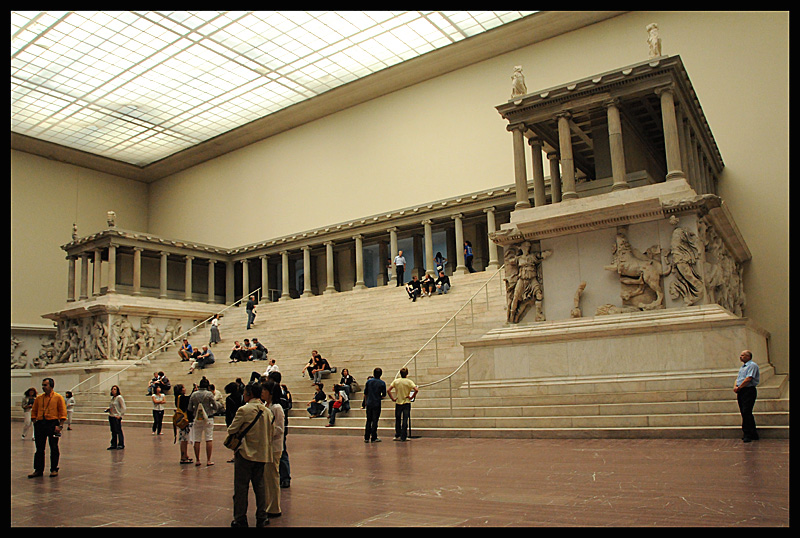
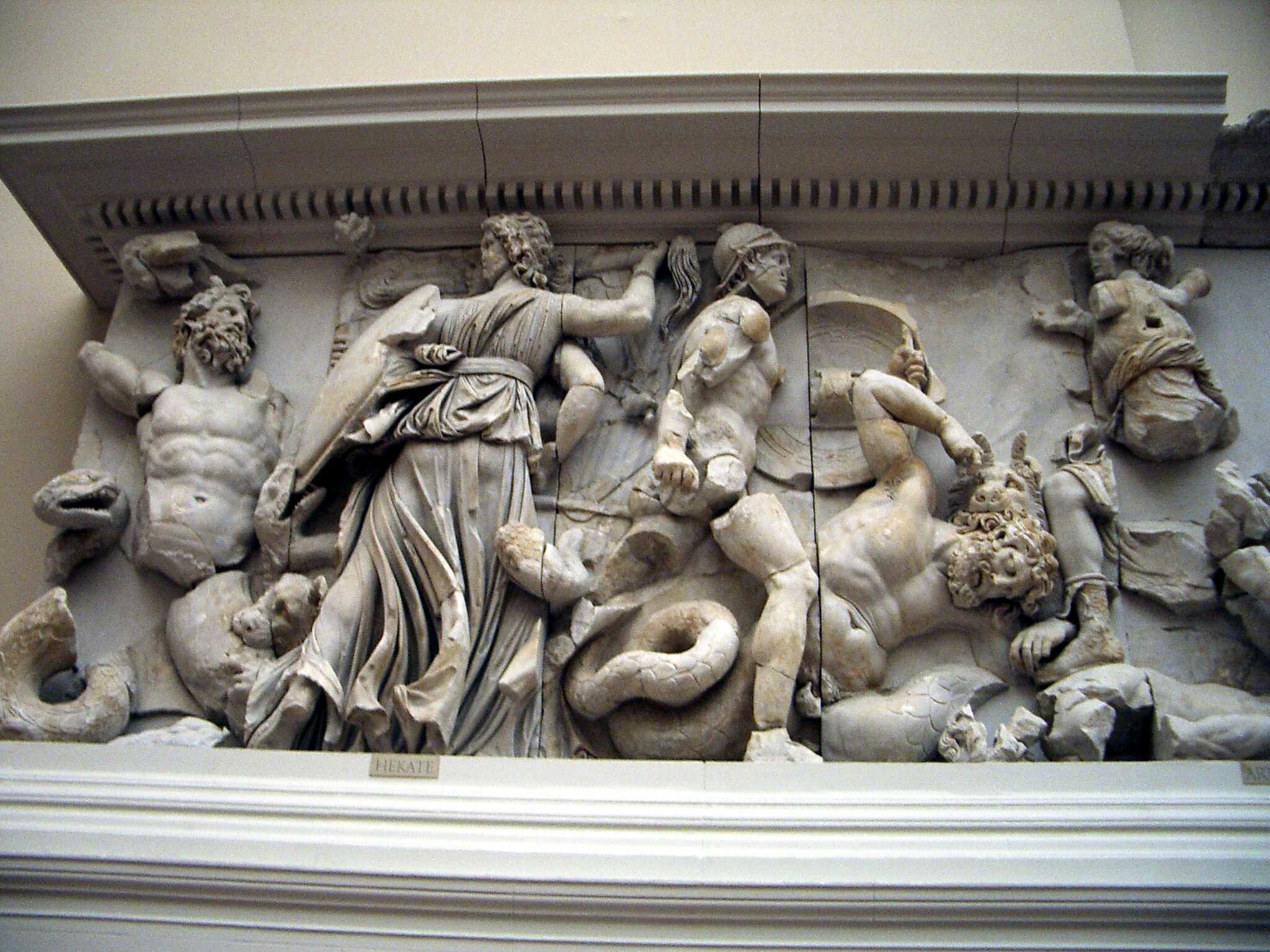
0 comments
Sign in to join the conversation.