

The Septuagint translation as the key to the etymology and identification of precious stones in the Bible
 Drew Maust · Oct 25, 2020, 6:50 AM · Last modified: Sep 28, 2026, 11:38 AM
Jacobus A. Naudé and Cynthia L. Miller-Naudé, “The Septuagint Translation as the Key to the Etymology and Identification of Precious Stones in the Bible,” HTS Teologiese Studies / Theological Studies 76.4 (2020): 17. https://doi.org/10.4102/hts.v76i4.6142. (PDF)
Abstract
In the ancient world, precious stones (valuable stones and hard substances excluding gold, silver and copper) were distinguished in terms of appearance (beauty, colour), function (durability) and cost (rarity). As a result, there is considerable difficulty in determining how to correlate the inventory of lexical terms referring to precious stones in the ancient Near East with modern mineralogical identifications. In this article, the etymology and identification of precious stones in the Bible are revisited using editorial theory and complexity thinking. The starting point for lexicographical identification is the breastpiece of the high priest (Ex 28:17–20; 39:10–14) with its 12 precious stones and the translation of the Hebrew terms in the Septuagint. In the light of the considerable writings in the Hellenistic world on precious stones, especially Pliny’s Naturalis Historia and Theophrastus’ On Stones, the Septuagint provides the key for the etymology and identification of the precious stones in both the Old Testament and the New Testament.
Contribution: The Septuagint translation of the precious stones in the high priest’s breastpiece is the Rosetta Stone for the identification all of the precious stones in the Hebrew Bible and New Testament. The subsequent translations of the terms indicate changes or substitutions of referents and their meanings.
**Conclusion (p. 15)
**
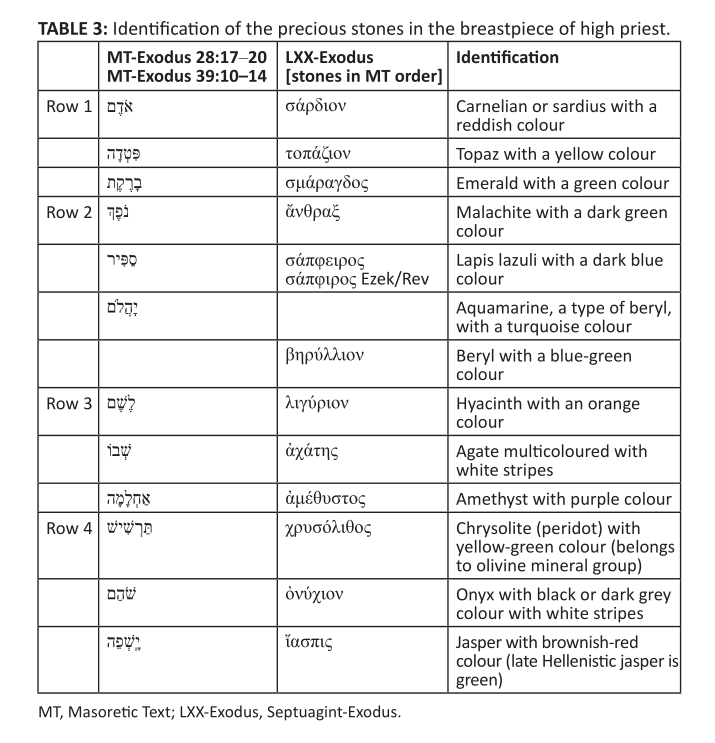
In this article, we have demonstrated how editorial theory and complexity thinking provide powerful methodologies for the etymology and identification of precious stones in the Bible. The Septuagint translation of the names for precious stones provides invaluable information concerning the identity of the precious stones in the Hebrew Bible. The Septuagint’s pivotal role stems from two facts. Firstly, the Septuagint is the oldest translation of the Hebrew Bible and thus provides the earliest translation indicating how the translators understood the Hebrew terms. Secondly, there were important and detailed analytical works on stones in Greek (Theophrastus’ On Stones and Pliny the Elder’s Naturalis Historia), which described the stones and their physical characteristics. Based upon the analysis in the preceding sections, the identification of the precious stones in the breastpiece of the high priest can be summarised in Table 3.
1 comment
Sign in to join the conversation.
Not completely on topic, but this is an interesting contribution by the German NT translation of Berger / Nord on the precious stones used in Revelation: https://tips.translation.bible/story/jewels-in-the-new-jerusalem/